

The countdown to my 30th birthday has officially hit the “1 month to go” deadline.
If you have been reading my blogs for a while now, you already know that I am a millennial corporate professional. Every day, I navigate back-to-back Zoom calls, endless Teams notifications, and a fragile social life. Hitting a milestone age brings a sudden wave of clarity.
In my early 20s, I treated my body like an indestructible machine. Literally. I survived on iced coffee. I stayed up past midnight finishing presentations. Back then, I thought “wellness” meant a panic-ordered green juice after a stressful weekend.
Now, things look different.
My body is shifting. My energy levels require deliberate preservation. The looming reality of long-term wellness forces me to rethink my lifestyle.
Health in your late 20s and early 30s is really not about fitting into a specific dress size. It is not about mastering an aesthetic, 10-step morning routine. Instead, things women can do to stay healthy are about sustainable vitality.
And the sooner you understand this, the better.
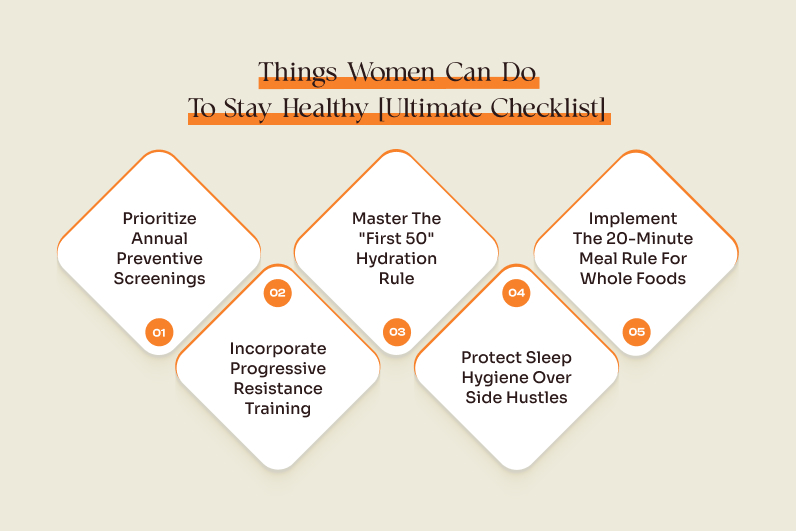
Things Women Can Do To Stay Healthy [Ultimate Checklist]
The National Institutes of Health (NIH) publishes global medical insights regularly. Their data shows that establishing foundational, preventive habits during this exact decade reduces chronic disease risks by up to 80%.
I searched for actionable, science-backed things women can do to stay healthy. During my research, I discovered that small, non-negotiable updates to a daily routine yield the highest returns.
Here is my personal, clinically backed guide to surviving the modern corporate grind. These steps protect your physical and mental well-being simultaneously.
1. Prioritize Annual Preventive Screenings (The Non-Negotiables)
Honestly speaking, when I started this “I will make sure I am healthy before I turn 30,” this did not cross my mind. Annual health check-ups, to me, were reserved for aging parents. But trust me, that’s ot how things should work.
So, how can women proactively track their health markers?
Schedule and complete your annual well-woman examinations, pelvic exams, and routine blood panels. Believe me, this is the single most critical step you can take to protect your long-term health.
These screenings establish your personal health baseline. Medical professionals use this baseline to catch hormonal imbalances, vitamin deficiencies, or early cellular changes. They find these issues long before physical symptoms manifest.
Here’s a quick checklist that I want you to take a look at:
| Screening Type | Recommended Frequency | Primary Health Metric Tracked |
| Well-Woman and Pap Smear | Every 3 to 5 years | Cervical health and HPV detection |
| Complete Blood Count (CBC) | Annually | Iron levels, anemia, and active infection markers |
| Fasting Lipid Panel | Every 1 to 2 years | Cholesterol status and cardiovascular risk profiles |
| Vitamin D and B12 Panel | Annually (crucial for desk jobs) | Bone density, neurological wellness, and metabolic energy |
In my mid-20s, I skipped these appointments constantly. I assumed that a lack of pain meant a clean bill of health.
Last year, my annual blood panel revealed severe, borderline-clinical Vitamin D and ferritin deficiencies. And this data explained the debilitating 3 PM brain fog that I had been blaming on my workload.
So yes, do not wait for a health crisis to schedule a checkup. Act as your own primary health advocate.
2. Incorporate Progressive Resistance Training
Can we take a moment to be honest about the fact that men and women are not equal on a physiological level? At least that’s the majority of the case.
Even an article published by PubMed Central mentions that, on average, women have “less muscle strength than men.” Which is why resistance training – or strength training, as most people call it – is so very important for young women. [Source: National Library of Medicine]
Engage in progressive resistance training at least two to three times per week. This habit maintains your functional metabolic health and preserves your bone mineral density.
Muscle mass naturally begins a gradual decline as we enter our fourth decade. And this decline slows down your resting metabolic rate. Besides, it also increases the risk of osteoporosis later in life.
For Gen Z and millennials working sedentary office roles, lifting weights serves a secondary, vital purpose: structural correction.
I personally keep having this conversation with my girlfriends about how hours spent hunched over a laptop have been wreaking havoc on our posture.
And I am sure most of us are in the same boat. But guess what? This habit leads to weak glutes, tight hip flexors, and chronic lower back pain.
You do not need to live in a gym to see results. I track my consistency rather than my intensity now:
- Prioritize compound movements: Use squats, deadlifts, and overhead presses to engage multiple muscle groups simultaneously.
- Maintain low-impact consistency: Dedicate just two 30-minute blocks a week to lifting heavy weights. Focus entirely on proper form over aesthetic outcomes.
- Increase NEAT movement: Pair lifting with a daily step goal. This combination keeps your joints lubricated and active throughout the corporate workday.
3. Master The “First 50” Hydration Rule
I am still struggling with this. However, I have been trying to do my best to stay hydrated. So, what is the most effective way to prevent daily dehydration?
Drink at least 50 ounces. (which is around 1.5 liters) of pure water before the first four hours of waking. This method is most effective in delivering optimum cellular hydration.
Let me tell you how it works.
You see, dehydration is a very normal process when one is sleeping. So, basically, drinking water in the morning is a way of reversing this. It also kickstarts your metabolic activities. Further, it ensures that you remain in a stable mental state.
There’s literally no rocket science behind it.
I used to reach for a second double espresso before drinking a drop of water. As a result, I suffered from constant, low-grade tension headaches by lunchtime every day.
Now, I keep a measured 32-ounce water flask at my desk. I finish one bottle before my noon alignment meeting. I finish a second bottle before my afternoon log-off.
This routine checks off my daily hydration goals effortlessly.
Proper hydration keeps your digestion regular and clears your skin barrier. It also prevents your brain from misinterpreting thirst signals as sugar cravings.
4. Protect Sleep Hygiene Over Side Hustles
All of us are aware that, in reality, sleep patterns directly affect women’s hormonal balance.
Be sure to have at least 7 hours of undisturbed and deep sleep every day. Sleep is crucial and necessary for preserving the fine balance of women’s metabolic and reproductive hormones. Sleep of this quality actually regulates your insulin, cortisol, and estrogen levels.
Chronic lack of sleep breaks down your endocrine system. This, in turn, causes an increase in your stress level, sugar cravings, and the deterioration of your cognitive performance during the day.
We are a very sleep-deprived society.
We are constantly busy at our jobs and hardly ever rest at night. Our society promotes the culture where you work from 5 am up to, you build a side business, still check your e-mails at night, and are expected to always look good for social media.
However, burning the candle at both ends fast-tracks you to adrenal burnout. I had to establish a strict digital boundary to protect myself. Here are three things that I did:
- Silence all work notifications by 9 PM sharp.
- Create a cool, dark sleeping environment every night.
- Swap my phone screen for a book one hour before bed.
This shift completely altered my deep sleep metrics. It gives me sustainable, natural energy that no energy drink could ever replicate.
Note: To know more about how much sleep a woman needs, you can check out my previous blog.
5. Implement The 20-Minute Meal Rule For Whole Foods
As a busy working woman, I know how difficult it might become for us to maintain a balanced nutritional profile. Which is why I started implementing this 20-minute meal rule for Whole Foods. This is what my friend suggested to me, and it works wonders.
It’s probably the best way of optimizing your gut health and nutrient absorption easily. Personally, I follow this mindful, three-step dietary pacing strategy daily:
- Build a whole food base: Prioritize lean proteins, complex carbohydrates, and high-fibre leafy greens over processed convenience meals.
- Slow down your pace: Chew your food thoroughly. Consciously put your fork down between bites to extend your mealtime to at least 20 minutes.
- Disconnect entirely: Step away from your desk, smartphone, and laptop screens during your meal. This helps your body enter a restful, digestive state.
Also, I know we are always in a rush. But slowing down your pace of eating allows your gastrointestinal tract to function properly. It signals satiety to your brain via the hormone leptin. This process prevents overeating and minimizes afternoon bloating.
When deadlines loom, we often order hyper-processed takeout. We wolf it down while typing out emails.
This pattern destroys your digestive tract. It leads to massive glucose spikes followed by severe energy crashes.
I prepare simple meal preps instead, focusing on roasted chicken, sweet potatoes, and broccoli. This approach allows me to eat clean food even during high-stress weeks.
6. Practice Good Hygiene:
Regular hand washing, especially before and after eating or using the restroom, can help prevent the spread of germs and infections. Women should also practice good oral hygiene, including brushing and flossing daily, to prevent tooth decay and gum disease.
Showering or bathing often can help prevent skin infections and maintain hygiene. Women should regularly clean and disinfect frequently used items, such as cell phones, keyboards, and countertops, to avoid the spread of germs.
Women should also practice safe sex to prevent sexually transmitted infections using barrier methods such as condoms or dental dams. By practicing good hygiene habits, women can reduce the risk of diseases and illnesses and promote overall health.
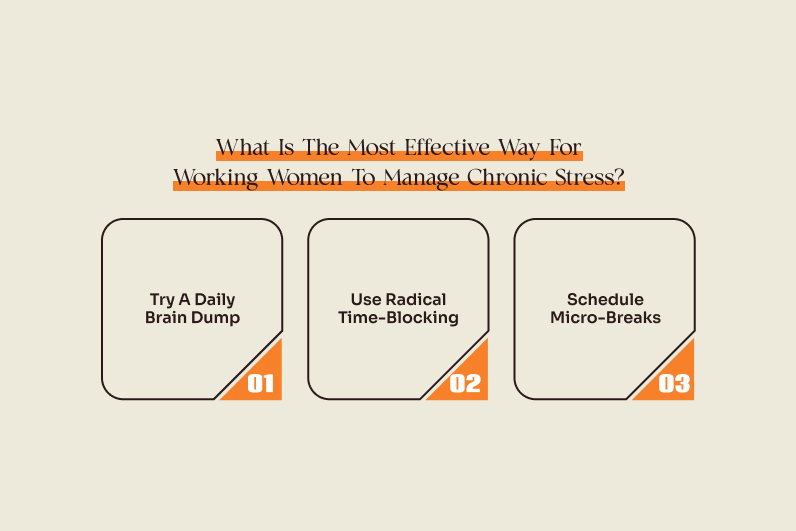
What Is The Most Effective Way For Working Women To Manage Chronic Stress?
Give your brain a regular rest. Setting daily limits keeps you healthy. It stops your neuroendocrine system from triggering physical stress.
The National Institute of Mental Health (NIMH) warns about chronic stress. Without good management, you can face psychological burnout.
This burnout causes systemic inflammation throughout your body. For working women, mental health care is a biological necessity. It is not a luxury.
Modern corporate environments demand constant multitasking.
We juggle work, family, and societal pressures. This mixing causes severe mental overload. Your brain never gets a break. Your nervous system stays trapped in a constant fight-or-flight response.
Personally, I decided to change my daily routine to protect my focus. If you want to do the same thing, I suggest you replace passive scrolling with hands-on habits.
- Try a daily brain dump: Spend 5 minutes writing down every single task and commitment. Moving thoughts to paper makes your brain feel safe.
- Use radical time-blocking: Block one full hour on your calendar for deep work. Ignore all instant messages and pop-up notifications during this time.
- Schedule micro-breaks: Step away from your screens for 5 minutes every two hours. Look out a window or take deep diaphragmatic breaths. This breathing actively lowers your cortisol levels.
Trust me when I say this: these work like a miracle. These few things helped me manage my chronic stress. Besides, it also helped me in dealing with burnout.