
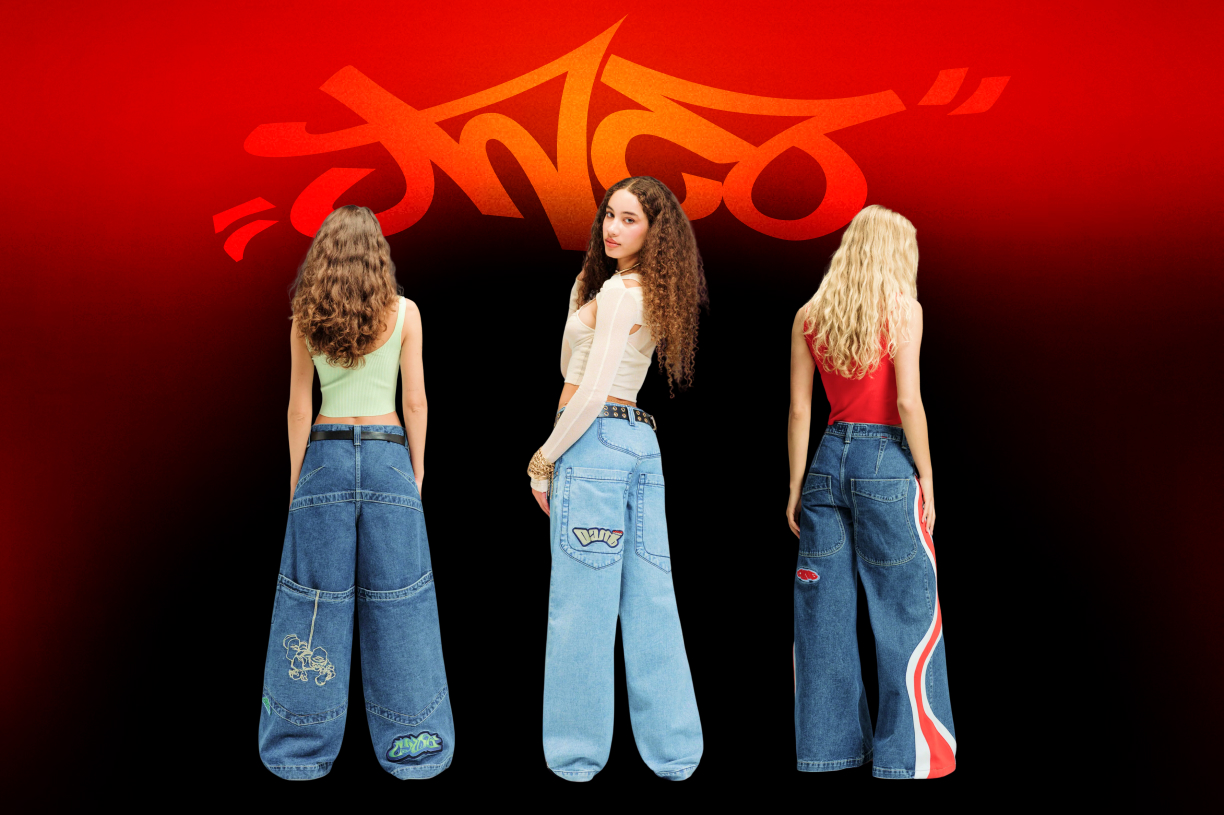
I recently found my sister staring at a Depop listing like she was analyzing a rare piece of fine art. The object of her obsession? A pair of vintage JNCO “Mammoth” jeans with a 32-inch leg opening. The price tag was a staggering ₹25,000.
As a Millennial, my first instinct was to laugh.
I remember these jeans. I remember the soggy, frayed hems that acted like literal street mops. And the way they made everyone look like they were floating on denim clouds. Back then, they were the “ugly” uniform of skaters and ravers.
But I’ve had to eat my words.
In 2026, those “ugly” jeans are no longer a punchline. They are a high-value financial asset. JNCO (Judge None Choose One) has transitioned from a 90s relic to a strategic pillar of the modern “Archive” economy.
Why is a brand once mocked as “clown pants” now commanding four-figure prices in USD? Why are JNCO jeans so expensive?
Honestly, the answer lies at the intersection of scarcity, the “Anti-Algorithm” movement, and a radical shift in how we define status.
About JNCO Brand
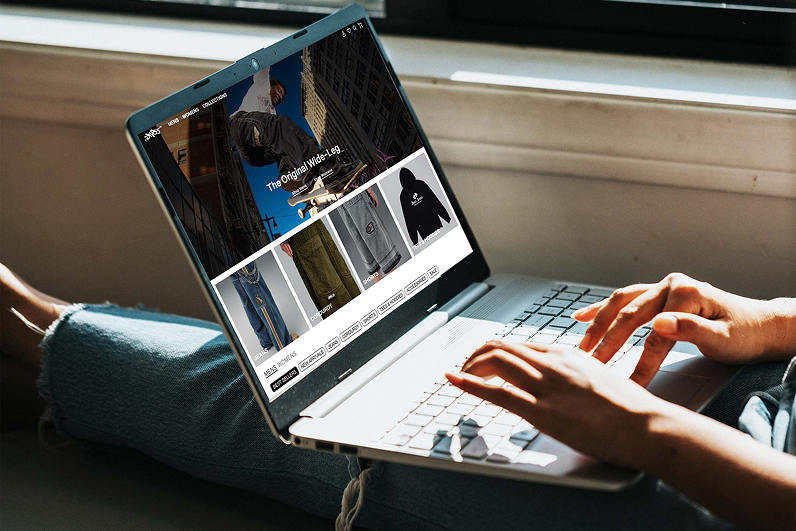
JNCO – short for “Judge None Choose One” – is the ultimate 1990s street-culture manifesto. Born in Los Angeles in 1985, brothers Haim and Yaakov Revah didn’t just design denim – they engineered a structural rebellion.
While the mainstream was obsessed with the polite “dad fit” of Levi’s 501s, JNCO was busy building fortresses for skaters, ravers, and hip-hop heads. You know the ones who would carry a 50-pound boombox? Yes, they were the consumers.
These weren’t just pants. They were sticking out a finger to the polished perfection of the status quo in the world of fashion.
While they closed in the early 2000s, the brand kind of revived around 2015 after licensing deals with a few Chinese investors. However, after three years of production, they closed again in 2018. (Source: Fox 10 Phoenix)
After a year, in 2019, the original co-founder reacquired the brand – returning to their roots! And as of 2026, the legend is back, and my sister is already obsessed.
Why Are JNCO Jeans So Expensive?
We have officially moved into the “Post-Fast Fashion” era. In 2024, people wanted what was new. In 2026, we want what is rare. My sister’s generation doesn’t care about “looking rich” in the traditional sense. They care about “looking archival.”
JNCO fits this mandate perfectly.
Because the brand faced multiple production halts and bankruptcies over the last two decades, original 90s pairs are finite. They are like non-renewable resources right now.
When demand for the “Wide-Leg” silhouette exploded recently, the market structure hit a bottleneck.
Supply is low. Demand is hysterical.
And you know what? From what I can see, this is no longer just fashion. Instead, it’s a commodity market.
The Scarcity:
To understand the price, you have to understand the history.
As I have already mentioned above, founded in 1985 in Los Angeles, JNCO was a rebellion against 80s conformity.
But their peak – the 50-inch leg openings of the late 90s – was their undoing. They became too extreme for the mainstream.
By the early 2000s, the brand faded. It attempted various relaunches, but none stuck until the 2019 revival by original founder Milo Revah. This gap in production created the scarcity.
Just think about it – if you want a pair of “Twin Cannons” from 1997, you can’t go to a mall. You have to go to a specialized vintage dealer or win a bidding war on a resale platform.
I’ve analyzed the data. JNCO vintage “Crime Scene” or “Mammoth” models are currently seeing a 400% markup from their original retail price.
And for Gen Z, owning an “OG” pair isn’t just a style choice. It’s a flex of historical knowledge and “search skills.”
The Anti-Algorithm Aesthetic:
Why do we want to look like this? I asked my sister, and her answer was characteristically blunt: “Because the AI can’t figure it out.”
In 2026, our digital lives are curated by perfect style predictors. As a result, in a way, if you wear what’s “in,” you look like a simulation.
However, dressing in “ugly,” absurdly wide-leg jeans is a direct attack on that perfection. It is what I call Ironic Maximalism.
And I am not the only one who thinks this way.
My research tells me that maximalism is almost like the basis of “Gen Z’s fashion manifesto” – being risky and bold is what they are all about. (Source: Instituto Marangoni)
Now, the JNCO silhouette is intentionally “wrong.” It defies the vertical, slimming lines that fashion magazines spent 30 years pushing.
By wearing something that looks like a “glitch,” Gen Z asserts its humanity. They are staying “un-searchable.”
In this context, the high price is a “barrier to entry” for a club that values unpredictability over elegance.
The Silhouette:
There is also a functional psychology at play. For instance, think about the rise of Gorpcore-Lite. We value gear that feels like “protection.”
JNCOs, with their heavy 14oz denim and massive pockets, feel like wearable fortresses. They offer a sense of physical space in an increasingly crowded, digital world. My sister doesn’t just see “big jeans.” She sees a “functional shelter.”
When you combine that psychological comfort with the rarity of the 90s embroidery – the crowns, the graffiti logos, the characters – you get a “Perfect Storm” of value. We are paying for the “vibe,” but we are staying for the durability.
JNCO Jeans Price: The Real Cost Of ’90s Nostalgia
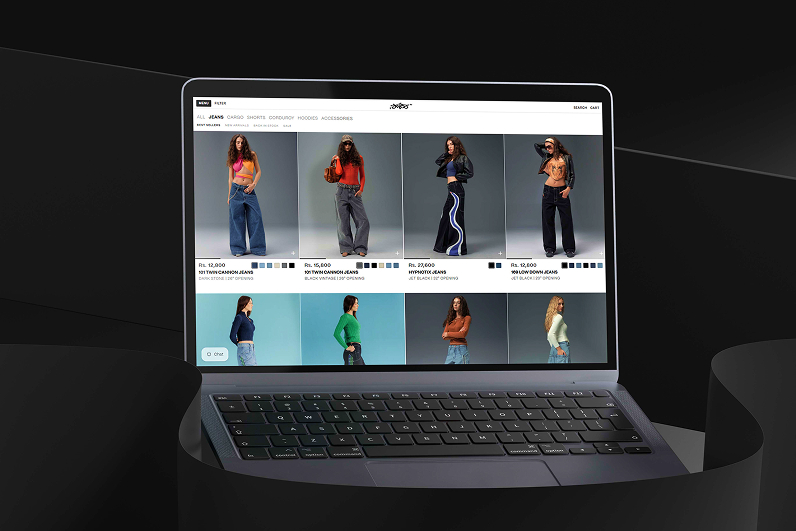
Let’s look at the numbers. Based on my analysis of current resale platforms, here is how the JNCO market is structured in 2026:
- The Heritage Relaunch: You can buy a “new” pair of Twin Cannons directly from JNCO’s website for about $130 – $160. These are great for daily wear, but they don’t hold “archive” value.
- The Vintage “Mid-Tier”: Standard 90s pairs with some wear and tear are fetching between ₹8,000 and ₹12,000 on sites like Etsy and eBay.
- The “Holy Grails”: Mint-condition “Mammoth” or “Kangaroo” jeans. These are the ones I see my sister tracking. They are selling for $500 to $1,500.
Why the massive jump?
Because in 2026, the “OG Tag” is a trust signal. It proves the item survived the era. It’s a piece of history. And we are all collectors in our own way.
Cost Of JNCO Jeans In India
Here’s where I would really want you to listen (or read) carefully. Once you start looking closely into the JNCO market in India, you will be able to find a massive gap.
And this gap that I am talking about exists mainly because JNCO doesn’t have a standard retail operation in India. So, this means that officially, JNCO doesn’t manufacture in India yet.
As a result of this when you try buying these baggy pair of jeans, you will automatically have to incur heavy customs, shipping, and import markups.
So, this is how the pipeline looks:
- Imported Fast-Fashion Retailing: If you look at platforms like Amazon India or Ubuy, you’ll find lower-tier streetwear cuts or outright replicas labeled as “JNCO Baggy Jeans.” Even for these knockoffs, consumers are shelling out anywhere from ₹3,000 to ₹9,300.
- Domestic Premium: When specialized domestic streetwear curators like Lowkey Dripped manage to secure highly sought-after, authentic styles – like the JNCO 7 Lucky Dice Denim – the pricing instantly spikes to a premium of around ₹10,000.
- Global Shipping Cost: If a die-hard fan tries to bypass the middleman and order directly from the official JNCO website or marketplaces like Etsy India, they are getting hit hard. Once you factor in international shipping and Indian custom duties, the cost automatically skyrockets to ₹10,000 to ₹14,000+ for a single pair. [Source: Etsy]
How To Buy JNCO Jeans Without Getting Scammed?
If you’re a Millennial like me trying to reclaim your youth, or a Gen Z looking for your first archive piece, you need a strategy. The “Scam Economy” is real.
First, check the tags. Authentic 90s JNCOs have very specific, often colorful, embroidered tags on the rear pockets and inside the waistband. If the embroidery looks “flat” or the thread is thin, it’s likely a modern “rep” (replica).
Second, assess the hem. In 2026, we actually want some “heel drag” (wear at the bottom of the leg). It proves the jeans were actually worn in the 90s. However, if the denim is rotting or smells of mildew, the “Archive” value drops.
Third, verify the weight. Real vintage JNCOs are heavy. If they feel like thin, modern “stretch” denim, run away. You’re paying for the “Heavy-Duty” soul of the 90s.
Where Can You Buy The JNCO Jeans?
The suburban mall era is dead, but the JNCO market structure is thriving in the “Archive” economy.
If you’re looking to dodge the algorithm and snag a pair of these wide-leg fortresses today, here is your 2026 playbook:
- Official Store: Visit the JNCO website for high-quality, authentic heritage re-releases.
- Boutique Retailers: Trend-led physical stockists like Rogue NYC offer that “lived-in” experience.
- Online Marketplaces: For “OG” 90s clout, my sister swears by Etsy and Ubuy.
Whether you’re buying new or hunting for vintage gold, these are your entry points to Vibe-Stability.
Corporate Grunge Aesthetic: Can You Wear JNCO Jeans As Workwear?
I know what you’re thinking: “I can’t wear 50-inch jeans to my office. Office wear is all about being formal.”
But remember my analysis of corporate grunge in my previous blog on Gen Z style?
I’ve started seeing high-level creatives pair “slimmer” JNCO models (like the 20-inch openings) with sharp, tailored blazers and sleek loafers.
It’s almost like a tech-utility hybrid that works. It says: “I understand the history of streetwear, but I can still lead a boardroom.”
It’s about the “High-Low” paradox. Pairing a ₹20,000 vintage jean with a minimalist ₹2,000 tee. It creates a silhouette that is both professional and completely individual.
JNCO Is A Strategic Asset, Not Just Fabric
As I finish this blog, I look back at my sister. She eventually closed the Depop tab, but she didn’t stop talking about it. She’s saving up. For her, that pair of JNCOs isn’t an “ugly” relic. It’s a stake in a movement.
The high price of JNCO in 2026 is a symptom of our collective desire for permanence. We are tired of “disposable” culture. We want things that have weight, history, and a middle finger pointed at the algorithm.
Whether you love them or hate them, JNCOs are the most honest garment of our time. They don’t try to be “slimming” & “polite.” They just are. And in 2026, “being yourself” is the most expensive thing you can buy.