

It all started at Farheen’s bittersweet goodbye party as she decided to start her nomadic lifestyle journey.
She sold her car, canceled her lease, and fit her life into a 40-liter backpack. As we drank wine from paper cups, she dreamed aloud of Lisbon cafes and Mediterranean sun. To most, it was a dream. To me, it was a case study.
Over the next year, I watched Farheen’s highest highs and grittiest lows.
I saw the Bali “honeymoon phase” and the 3:00 AM panic when her hard drive crashed in a remote village.
Trust me when I say this – her journey was a reality check.
It was through her experience that I realized that nomadism isn’t just about travel. Rather, it’s a total restructuring of your idea or concept of home.
Farheen’s experience exposed the massive gap between “laptop on a beach” photos and the daily grind.
What Is A Nomadic Lifestyle?

According to Study.com, a nomadic lifestyle is “a way of life of individuals that move from place to place and do not reside in the same area for long.” This is something that most of us learned as children in school.
Now, there is something that has changed.
As a child, we would read about people who would move from one place to another – the basic definition of nomadism/nomadic life. However, nowadays, it’s a choice.
People are genuinely choosing to make the shift. They are choosing to leave their comfort zone and adapt to a nomadic lifestyle.
Basically, a nomadic lifestyle means not having a fixed, long-term home. You change your location inside your country or abroad.
The majority of modern traveling people support themselves through remote jobs or online businesses.
However, don’t confuse this with a typical holiday. This is a permanent lifestyle that requires work, moving from one place to another, and continuous adjustment.
For instance, Farheen had trouble with this concept initially. She even considered her first month as a vacation. However, she realized that work is not going to vanish just because you have a beautiful sunset.
Common types of nomads include:
- Digital nomads.
- Van lifers.
- Slow travelers.
- Seasonal workers.
Where India Stands In This Nomadic Lifestyle Race
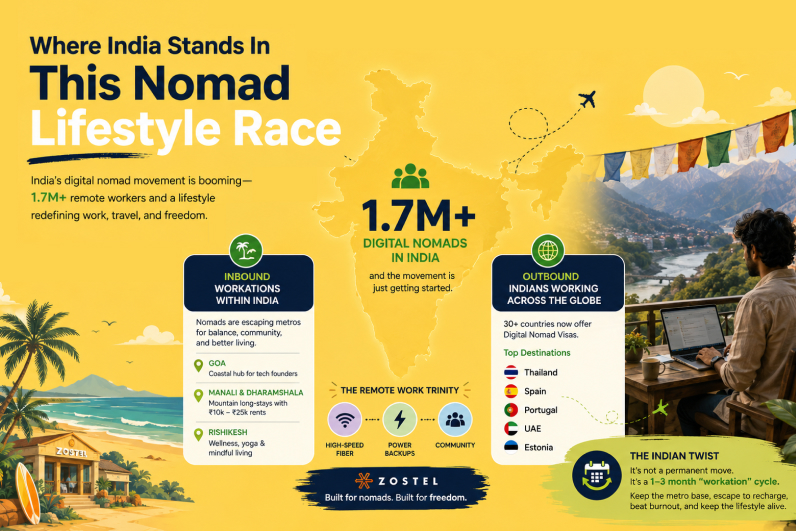
The Indian digital nomad scene is undergoing a massive, explosive boom. Driven by high-earning tech pros and creative freelancers, the country now hosts a staggering 1.7 million remote workers.
And this movement isn’t just one-directional. Rather, it’s a two-way street split between:
- Inbound (Workations within India)
- Outbound (Indians working across the globe).
Instead of burning cash on steep rents and traffic in Bengaluru, nomads are escaping to tier-2 hubs. [Source: Pleco Migration]
You have Goa commanding the coastal scene for tech founders, Manali and Dharamshala anchoring mountain long-stays on budget-friendly ₹10k – ₹25k rents, and Rishikesh capturing the wellness crowd.
The baseline infrastructure making this possible? Organized hostel chains like Zostel providing the holy trinity of remote work:
- high-speed fiber,
- power backups,
- community.
Flip the script, and the outbound wave is just as massive. Indian passport holders are taking advantage of 30+ countries offering streamlined Digital Nomad Visas – migrating everywhere from Thailand to Spain.
But the unique cultural twist here?
Unlike Western nomads who give up their apartments entirely, Indians treat this as a 1-to-3-month “workation” cycle.
They keep their metro base but escape to the beach to beat seasonal burnout, dealing with crazy US/EU time-zone shifts from a café just to keep the lifestyle alive.
Is Corporate Burnout Pushing This Shift?
The psychological contract between young workers and corporate employment is officially dead.
Driven by widespread burnout and the ongoing Great Millennial Career crisis, youth are aggressively decoupling self-worth from job titles.
Data highlights the shift: Deloitte’s Global Gen Z and Millennial Survey reveals that fewer than 5% to 6% of these workers now view climbing the traditional corporate ladder to reach a leadership role as their primary career goal.
Instead, there is a massive autonomy premium. Control over schedules completely trumps fast-paced corporate advancement, with nearly 50% outright avoiding promotions due to crushing workplace stress and poor work-life balance.
Paired with a booming independent creator and gig economy, the power dynamic has completely inverted – making geographic and temporal freedom the ultimate professional flex.
Nomadic Lifestyle Benefits: Why People Choose a Nomadic Lifestyle?
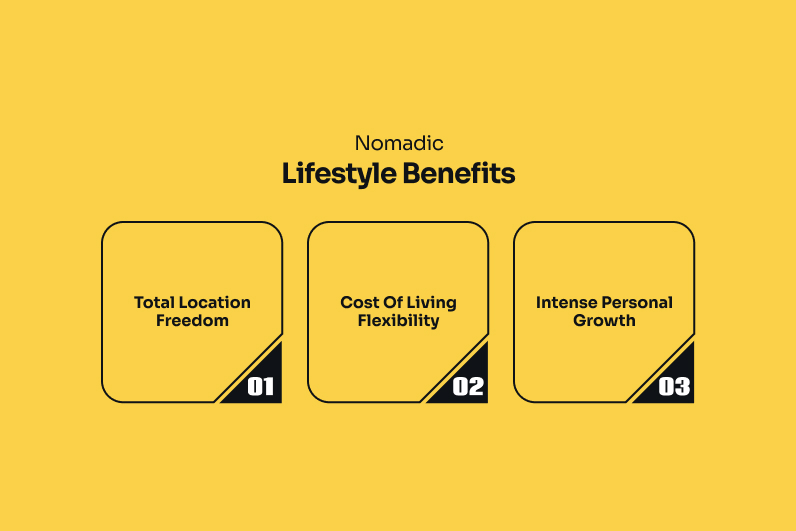
There are several reasons that I have analyzed why people choose this form of lifestyle over the traditional one. They are as follows:
1. Total Location Freedom
First and foremost, the main attraction is the ability to work from any place in the world. You are not confined anymore to a single desk or cubicle. You may opt for a beach town, a mountain village, or a hectic city.
I remember once I got a call from Farheen while she was in a Tuscany vineyard. I remember she said that she hadn’t felt such freedom ever – even in her old office.
However, working remotely already means dealing with certain issues like:
- Time zone differences.
- Internet connectivity issues.
- Complicated visa regulations.
So, if you are okay with that, you will reap the benefits!
2. Cost Of Living Flexibility
Second, a lot of nomads resort to “geoarbitrage” to make their money stretch further. In fact, you could be earning in dollars but spending in a currency that is much weaker.
At present, this scheme is very effective in Southeast Asia and Eastern Europe. Nevertheless, cost savings are not a certainty.
Traveling frequently and getting into short-term rentals can add up very fast. Farheen was able to save thousands in Thailand. However, she lost all her savings on a last-minute flight to London.
3. Intense Personal Growth
Third, living in different environments changes you. It exposes you to new languages and fresh perspectives. Consequently, you build independence and problem-solving skills.
However, this constant adjustment is mentally demanding. You must always learn new social norms and navigation routes.
The Less Talked About Challenges Of Nomadic Lifestyle
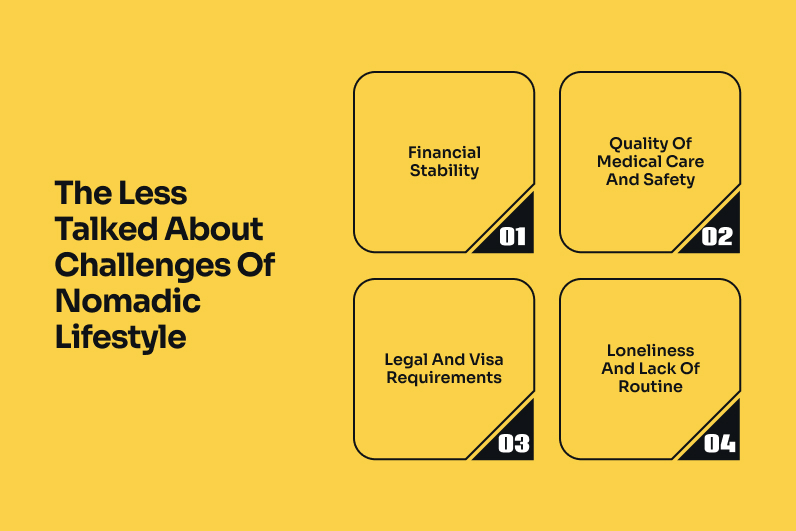
While the lifestyle looks glamorous, it is often difficult. Farheen’s journey taught me that a nomad’s “Tuesday morning” is frequently more stressful than a 9-to-5.
1. Financial Stability
You may find it difficult to decide where and how to earn more. As a freelancer, your income will be irregular, and you will have to deal with currency exchange, etc.
Besides, employer benefits like health insurance or retirement contributions vanish. So, building up a fund will be essential. I personally suggest stashing away 3 – 6 months of your living expenses
Farheen, for example, had a serious contract that suddenly fell through, and she was living in one of those expensive cities.
Trust me, she would have almost certainly failed if she hadn’t had her savings, as she happened to have them.
2. Quality Of Medical Care And Safety
Access to healthcare differs greatly from one country to another. If you do not have one, a medical emergency will be the worst financial nightmare for you.
First, it is a must that you buy international health insurance. Secondly, you will need to familiarize yourself with the local systems as well as be covered for emergency evacuation. This is especially important if you decide to go to quite remote areas.
3. Legal And Visa Requirements
Most countries do not permit remote work on a regular tourist visa. Their rules are always changing. Therefore, it is up to you to verify the visa conditions very thoroughly.
Besides, understanding one’s tax situation is indispensable to steering clear of any type of legal problems.
Luckily, there are now some countries that have dedicated digital nomad visas; however, they have different requirements.
4. Loneliness And Lack Of Routine
Constant moving does not allow time for deep relationships. It might all look like a dream at first, but things change over time!
You see, humans are social beings. At least that’s what I understood and strongly believe after reading Sapiens by Yuval Noah Harari. So, over time, the deprivation of contact will be detrimental to your psychological health.
Many nomads who make this sacrifice are the ones who end up getting “nomad burnout,” as I would like to call it. Apart from missing friends who knew her old life, Farheen finally reached a stage where she was fed up with her nomadic lifestyle.
Is The Nomadic Lifestyle Sustainable?
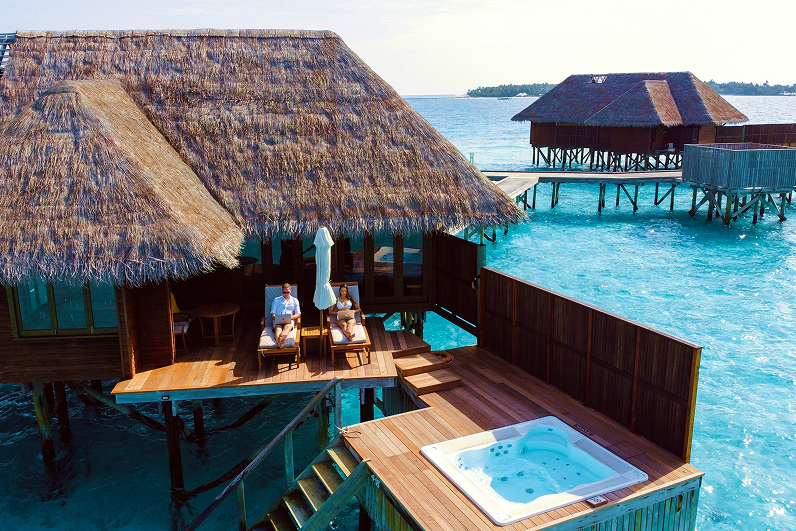
Is this life actually sustainable? Honestly, the answer depends entirely on your goals and how much legwork you’re willing to do.
Watching Farheen taught me that for some, this is a forever shift, while for others, it’s just a vibrant chapter. To make it last, you need more than just a passport and a dream. You need:
- Stable income sources.
- Health and insurance coverage.
- Emotional resilience.
- Clear boundaries between work and travel.
At the end of the day, it’s not about “escaping” reality. It’s about building a brand-new system that actually supports the life you want to live.
Practical Tips Before You Start Your Nomadic Lifestyle
Here are some of the things that you should definitely prepare for and be ready for before you make this lifestyle shift:
- Test it first
- Secure your income
- Plan your finances carefully
- Build a routine
Who Is This Lifestyle Best Suited For?

Probably, a nomadic lifestyle could be your cup of tea if:
- You’re flexible and not afraid of uncertainties.
- You have strong financial management skills and are able to support yourself on your own.
- Your job is remote, or you have a business that can be done from anywhere.
- You are more interested in collecting memories rather than having stability.
If, however, you depend on a fixed routine, need regular healthcare, or like to have long-term relationships with the community, this lifestyle may not be for you.
The Truth: Should You Try The Nomadic Lifestyle?
To be honest, from what I have seen, the nomadic lifestyle is rewarding but not for everyone. It requires intense planning and discipline.
If you approach it thoughtfully, you can see the world in a unique way. However, you must move beyond the hype.
Do not just mimic the envy you feel for friends like Farheen.
Instead, make decisions based on practical facts. Assess your finances and your goals first. A well-informed start makes all the difference.
Try it out. But don’t be rigid. If it’s not working out for you, you can always take a U-turn!