
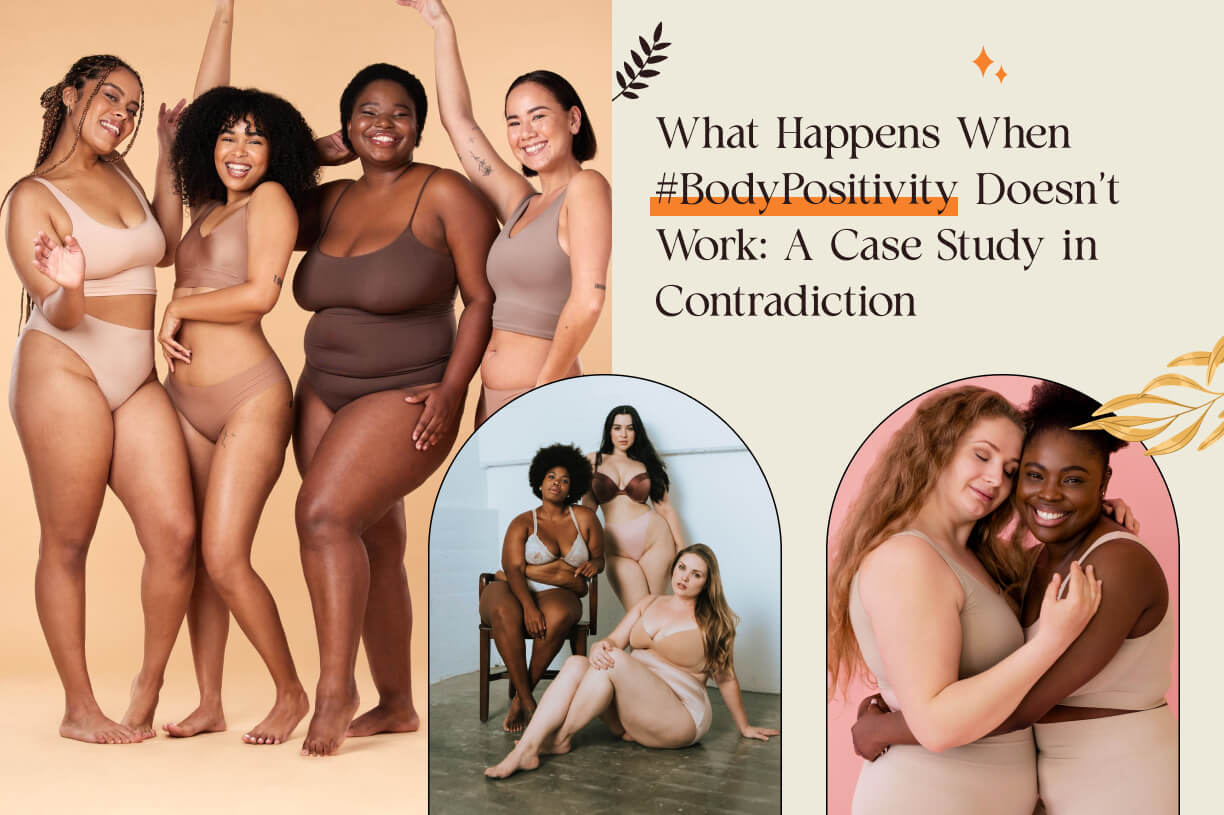
I turn 30 this year. Which means I’ve now spent a full decade watching the body positivity and inclusivity movement grow up alongside me.
I remember when it felt radical just to see a stretch mark in a magazine. I remember thinking, somewhere around 24, that we’d basically won — that the work was done, the hashtags had done their job, and the rest was just maintenance.
But I don’t think that anymore. Not because the movement failed, but because the data on it turned out to be far more complicated than the movement’s own marketing.
That complexity is the actual story.
So instead of another explainer on why body positivity matters, I want to treat it like a case study: what the research says is working, what it says isn’t, and where the gaps sit — including some I didn’t expect.
The Baseline Problem Body Positivity And Inclusivity Was Built To Solve
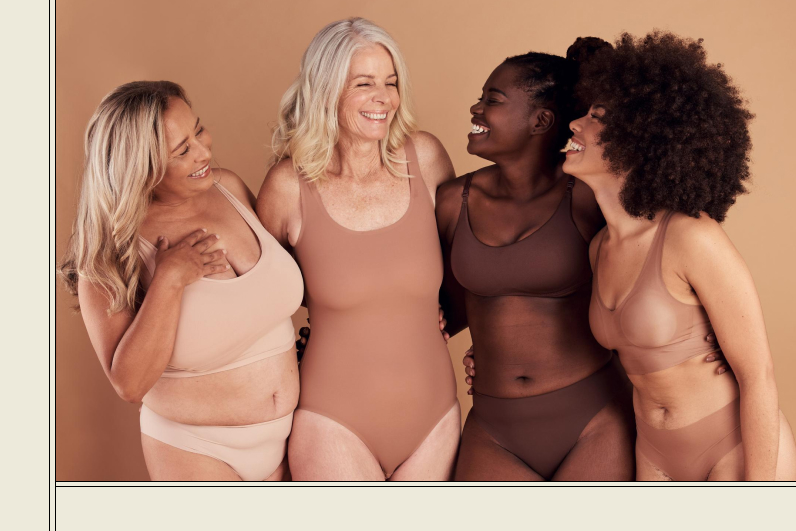
I will start with the scale of the issue, because it’s larger than most of us assume.
Dove’s 2024 Real State of Beauty Report is massive. It is the largest study a beauty brand has ever conducted. It found that millennial women report the lowest body confidence. Their confidence is lower than Gen Z. It is lower than Gen X. [Source: Dove, Glamour]
One in three women would trade a full year of life. They want what they consider a “perfect” body. Additionally, 69% admit to skipping social events. This is due to how they feel about their appearance. [Source: PR NewsWire]
An earlier global Dove study showed grim numbers. Only 4% of women worldwide described themselves as beautiful. Still, that was up from 2% two decades earlier.
This is the backdrop for the body positivity movement. It is not a fringe concern. It is not a social media overreaction. Rather, it is a documented, generational decline. It shows how women relate to their own bodies. That is the exact reason the movement exists.
The Finding That Complicates The Story
Here’s where the case study gets interesting, and where most articles on this topic stop being honest.
A 2025 study published in the journal Body Image tracked how #BodyPositivity content actually affected the people consuming it — and for sexual-minority men specifically, it found that exposure to body-positive content did not improve body image, and in some cases coincided with lower body satisfaction and worse mood.
That single finding matters more than it might seem.
It tells us the movement isn’t a universal fix — it’s a set of messages that lands differently depending on who’s receiving them, what community they belong to, and what pressures they’re already carrying.
A hashtag designed around body diversity for women doesn’t automatically translate into relief for men navigating a completely different set of appearance standards, many of which are barely discussed at all.
And men’s numbers are not small. Research out of Brazil found 74% of men reported dissatisfaction with their body image; a study among Chinese male college students put the figure at just over 35%.
Muscle dysmorphia — a preoccupation with not being muscular enough — shows up across this research as a male-specific pattern that generic body positivity content, built mostly around size and shape, doesn’t really address.
What This Tells Us About The “Unhealthy Lifestyle” Criticism
One of the most common critiques of body positivity and inclusivity is that it excuses poor health habits. The research doesn’t support that framing.
What it does show is that body dissatisfaction itself carries real costs — it’s been linked to avoidance of physical activity, disrupted eating patterns, and depressive symptoms in both women and men.
The Dove data above, where a third of women would sacrifice a year of life for a different body, isn’t a story about vanity.
It’s a story about the psychological weight of constant appearance-monitoring, and body positivity’s actual claim was never “all bodies are equally healthy” — it was “your worth isn’t contingent on matching one narrow standard.”
Those are different statements, and conflating them is where most of the criticism goes wrong.
Where Intersectionality Actually Shows Up In The Data
The criticism that body positivity centers one body type — usually a curvier, able-bodied one — while excluding others has more support.
Disability advocates have pointed out for years that fashion’s version of “inclusive” sizing rarely accounts for adaptive clothing needs, and the research on body image in disabled communities remains thin compared to the volume of studies on general population samples.
That gap is itself a finding: whoever gets studied gets served, and whoever doesn’t, doesn’t. If the movement wants to hold up under scrutiny rather than just under applause, that’s the area needing the most work.
What Actually Seems To Help, According To The Research
Buried in the same Dove research is a useful signal.
It is more telling than the confidence statistics themselves. Seven in ten women feel more confident when they take time for self-care.
For girls, that number is eight in ten. Meanwhile, 56% specifically named social media as a driver of appearance pressure. [Source: Huffington Post]
That points toward something more actionable than a slogan. The algorithmic feed itself is doing measurable work. It shapes how we see ourselves in both directions.
A parallel 2025 study tracked social media users across four years. It found that body image dissatisfaction has a seasonal rhythm. It peaks in summer and eases in winter. This trend was tracked through actual posting behavior rather than self-reports.
That’s a small but telling detail: our relationship with our bodies isn’t fixed. It moves with context, exposure, and what’s in front of us on a screen.
Here’s What I Think About The Body Positivity And Inclusivity Movement
I still believe in what body positivity set out to do. But treating it as a finished, universally effective movement isn’t accurate, and pretending otherwise is exactly the kind of thin, cheerleading content that doesn’t hold up to real scrutiny — mine included, a decade ago.
The honest version of this story is that body positivity worked as a corrective for one specific pressure, on one specific group, and the data on everyone else — men, disabled communities, sexual-minority men whose body image reportedly worsened under the same hashtag — shows a movement still catching up to the people it claims to speak for.
That’s not a failure. It’s a next chapter. And at 30, I’d rather read the research than repeat the slogan.
Continue Reading: