
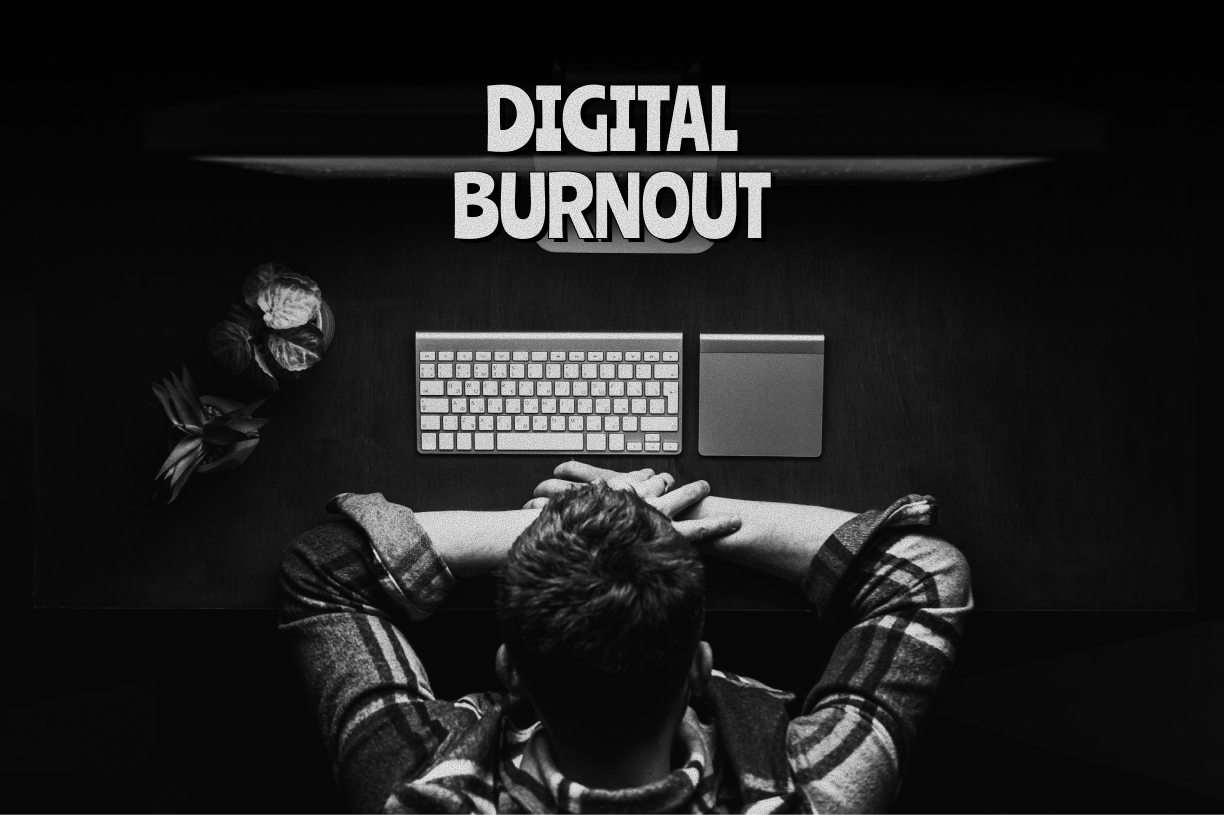
| Quick Answer Digital burnout is physical and mental exhaustion caused by constant screen use and connectivity – not by workload itself. You can have a light day and still end it depleted, because your nervous system never actually got a break from notifications, tabs, and the pressure to stay reachable. |
Two Fridays ago, I had what most people would call an easy day. One client call, a bit of editing, nothing urgent.
By 7 pm, my shoulders were up near my ears, my eyes felt sandy, and I had zero interest in anything – not the show I had been meaning to watch, not calling a friend back, nothing.
I remember thinking: I didn’t even do that much today. Why do I feel like this?
That question sat with me for a while, because it kept happening on days that had no real reason to leave me wiped out.
Eventually I stopped assuming it was just a bad week and started calling it what it actually was: digital burnout.
What Is Digital Burnout? It Wasn’t My Job That Exhausted Me

Digital burnout hits hard, not because you’re swamped with work, but because the endless screens and constant buzz just drain you.
It’s this overload – too much info, too many notifications, and a machine-gun stream of tiny decisions: clear that alert, switch tabs, answer messages right now.
Even on days that look easy on paper, your brain’s in overdrive, always processing and never really shutting off. Your nervous system stays stuck on high alert, as if every ping is something urgent, so you never get real rest.
A reason why you might always be feeling so overwhelmed.
By the end of the day, even if you barely did any real work, you feel wiped out. The real problem? It’s not how much you do. It’s how little you escape from all the screens.
Regular Tired vs. Digital-Burnout Tired
I used to lump every kind of exhaustion together, but they’re not the same thing. Physical tiredness usually responds to rest – you sleep, you feel human again.
Digital burnout doesn’t work that way.
You can have a deep sleep or sleep for eight hours and still wake up dreading your phone. You can take a Sunday “off” and still feel just as drained by Monday. This is because you spent that Sunday scrolling instead of switching off. [Source: Letsignit]
The exhaustion isn’t coming from effort – it’s coming from your brain never getting a genuine pause between inputs.
A Quick Way To Check If This Is You
Ask yourself honestly:
- Do you feel a small jolt of dread before opening WhatsApp or email, even when you’re not expecting bad news?
- Have things you used to enjoy online – a show, a scroll through Instagram – started to feel like just another task?
- Do you reach for your phone in gaps of ten seconds or less – a red light, a queue, an ad break – without even deciding to?
- Does your mind stay “on” at bedtime even though your body is exhausted?
I answered yes to all four, which is roughly when I stopped calling it a phase.
Where This Really Comes From In Indian Work Culture

A lot of people online assume a 9-to-5 that fully ends at 5. But let’s be honest – that’s rarely how it works here. There’s the client message at 9 pm that you feel obligated to answer because it’s “just one line.”
The unspoken expectation that being online on weekends means you’re a team player. The festival week where work Slack somehow doesn’t take a holiday even though everyone else in your life has.
None of these is dramatic on their own. But they add up to a workday that never fully closes, which is exactly the environment digital burnout thrives in.
The Small Habit Shifts That Made A Difference
I didn’t do a dramatic reset – I couldn’t, realistically, with a job that lives online. What actually helped were specific tips to reduce screen time rather than a vague “use your phone less”:
- Setting my phone to grayscale after 9 pm (it sounds silly, but a less colorful screen is genuinely less compelling to keep scrolling)
- Leaving my phone in another room during meals, even solo ones
- Replying to non-urgent work messages the next morning instead of the same night, on purpose
None of these fixed digital burnout overnight, but together they gave my evenings back some actual texture instead of just being a quieter extension of the workday.
Why Focus Feels Different Now
Somewhere in the middle of all this, I noticed I couldn’t read more than a few pages of a book without checking my phone. That’s not really about the book – it’s a side effect of digital burnout on attention.
When your brain is constantly interrupted all day, it starts treating interruption as the default state, and settling into anything longer than a few minutes starts to feel almost uncomfortable.
If you’re dealing with the exhaustion and the wandering focus together, it’s worth reading up separately on how to fix attention span, because the two tend to need slightly different fixes even though they show up at the same time.
What’s Actually Happening In Your Body

Here’s what changed how I thought about all this: digital burnout isn’t just “in your head.” Every notification, every reflexive check, every unread badge is a tiny stress cue, and your body responds to it the same way it would to any small threat – a brief spike in cortisol.
One spike is nothing. Dozens of them, all day, every day, is a nervous system that rarely gets to come back down to its resting state.
That’s really what a cortisol detox means in practice – not a supplement or a strict routine, but simply reducing how many times a day your body gets startled into alert mode. For most of us, that starts with the phone.
If you’re not sure whether stress hormones are actually part of your exhaustion or you’re just assuming it, a cortisol test at home is a reasonable way to find out rather than guess.
It won’t tell you “you have digital burnout,” but it can confirm whether your cortisol is running high, which at least tells you where to focus.
It is worth saying plainly. Reducing cortisol levels in women is different – not identical to generic stress advice.
Women experience cycle-related hormonal shifts. They often face sleep debt. They also tend to carry a heavy default mental load. All of these factors interact with cortisol differently.
And honestly, I think this explains a common mystery. Two people can have similar screen habits. Yet, they can experience digital burnout very differently. [Source: ICT Pulse]
Digital Burnout Isn’t The Same As Digital Dementia

Quick distinction, because I used to confuse the two: digital burnout is about exhaustion and emotional depletion. Digital dementia is more about memory and focus slipping.
They often show up together – because they share a root cause. However, they are not interchangeable. Is forgetfulness and brain fog your main complaint? Is it more of an issue than exhaustion?
If so, that is a slightly different piece of this puzzle. It is worth reading into on its own.
What Can Help You With Digital Burnout?
The single biggest shift was building in a real digital detox. Not a dramatic week offline. Just a consistent, boring hour every morning and evening with no screens at all. It took about ten days before I stopped instinctively reaching for my phone during that hour. [Source: McLean Hospital]
If your version of digital burnout has gone on for months rather than weeks, I would genuinely recommend trying a digital detox retreat at least once.
I was skeptical going in – it felt indulgent to “need” that. But having zero access for even 48 hours showed me, uncomfortably clearly, just how much of my daily fatigue had nothing to do with my actual workload and everything to do with never fully logging off.
Digital burnout crept up on me slowly enough that I spent months blaming everything except the actual cause.
If any of this sounds familiar – the exhaustion that rest doesn’t fix, the dread before opening an app, the focus that keeps slipping – it might be worth naming it instead of pushing through it.
| Disclaimer: This article is for general informational purposes and isn’t a substitute for professional medical advice. If exhaustion, anxiety, or low mood are affecting your daily life significantly, please speak with a doctor or mental health professional. |
Sources:
- McLean Hospital: “5 Ways To Fight Digital Burnout and Recharge”
- ICT Pulse: “Digital burnout: what are the signs and how you can fight it”
- Lesignit: “Digital Fatigue: Causes, Tips, and Practical Solutions