

| Quick Answer Maintaining healthy general foot conditions usually calls for getting regular pedicures, ideally every 4 to 6 weeks to match the natural cycle of skin cell turnover and nail growth rate. That said, besides skin cell turnover, toenail growth varies from one individual to another due to factors like lifestyle, physical activity level, and the state of the feet. |
For a long time, I booked pedicures whenever I felt guilty about my feet – no real schedule, just vibes.
Then I actually paid attention to how my feet looked and felt between visits, and realized how often should you get a pedicure isn’t a one-size-fits-all number.
It depends on your feet, your lifestyle, and honestly, your budget.
How Often Should You Get A Pedicure? The Real Answer Depends On Four Factors

Instead of chasing one universal number, I now run through four questions before booking:
- How active are you? Walking, running, or standing all day speeds up callus buildup and polish wear.
- Open or closed shoes? Sandals and open footwear expose feet to more friction and grime, which shortens how long results last.
- Do you wear polish, and which kind? Regular polish chips faster than gel, so it needs more frequent touch-ups.
- What’s your skin and nail health like? Dry, callus-prone feet need more frequent attention; naturally soft feet need less.
Different pedicure types also change the math – a basic pedicure needs a repeat sooner than a deluxe spa version, simply because it does less work on callus and skin in one sitting.
How To Tell You’re Overdue (Or Overdoing It)

Both extremes cause problems, and most guides only warn you about one side.
Signs you’re overdue:
- Visible dry, cracked skin on your heels
- Cuticles that are rough, torn, or catching on socks
- Nails that feel thick or uneven under the polish
Signs you’re overdoing it:
- Redness, burning, or unusual sensitivity after a pedicure
- Skin that feels thinner or more fragile than before
- Calluses growing back thicker or faster than usual – a sign of over-exfoliation, not under-care
If you’re seeing signs from the second list, stretch your gap by a week or two rather than pushing through on the usual schedule.
Diabetes, Pregnancy, Or Heavy Training Change the Schedule
This is where most frequency guides go vague, so here’s the practical version:
If You Have Diabetes Or Poor Circulation:
Firstly, in cases like this, you want to skip aggressive callus removal entirely. Never let a technician use sharp blades, razors, or credo knives on your feet.
Instead, always ask for a professional who is trained to work super gently. If you notice any cuts, redness, or slow-healing spots afterward, loop in your doctor or a podiatrist right away.
The experts at the ADA and APMA strictly advise against sharp tools because the risk of severe infection is just too high. [Source: Practo]
If You Are Pregnant: Book Every 3-4 Weeks
Regular, gentle maintenance is amazing for reducing painful leg swelling and keeping you comfortable. Just make sure the salon uses 100% completely sterilized tools.
You will also want to skip deep tissue foot massages and acupressure points around your ankles during your first trimester.
Experts are generally of the opinion that deep pressure here can theoretically trigger uterine contractions, so it’s always best to play it safe with light, superficial strokes instead. [Source: Healthline]
If You Run, Train, Or Stand For Long Shifts:
Your feet take a beating. You will likely need targeted callus and dead skin attention every three to four weeks. Do not wait for your nail paint to chip. Your skin health matters more than your aesthetic look.
Sandal Season vs. Winter: Adjust, Don’t Guess
I used to keep the exact same schedule year-round, which made no sense once I actually thought about it.
In sandal season, feet are visible and exposed to more dust and friction. As a result, every three to four weeks – sometimes with a French pedicure for something polished but low-maintenance – keeps things looking finished.
In winter, when feet are mostly hidden in closed shoes, stretching to every six to eight weeks is usually enough, since dryness is the main concern rather than appearance.
Gel And Russian Pedicures Change The Math

Polish type and technique shift your ideal frequency too.
Gel polish holds up for three to four weeks without chipping, so you can stretch your gap out. But removing gel too frequently (every two weeks or less) can thin and weaken your natural nails over time, so it’s worth giving your nails a break every couple of cycles.
A Russian pedicure, done with an e-file for more precise cuticle and callus work, tends to last a bit longer between visits than a basic pedicure because the results are more thorough.
On the flip side, something like a zero gravity pedicure is really about the experience and relaxation rather than a different treatment underneath.
So it doesn’t change your frequency at all – book it whenever you want the extra pampering, on whatever schedule your feet actually need.
What This Actually Costs You Over a Year
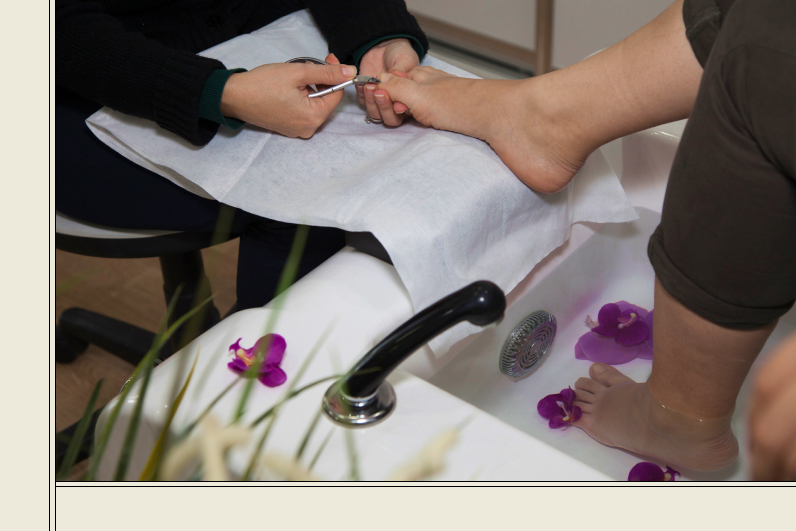
Frequency and budget are connected, even if nobody talks about it directly. In most Indian cities, how much does a pedicure cost typically runs ₹300 – ₹600 for a basic service, ₹800 – ₹2,000 for a spa pedicure, and ₹1,000 – ₹2,000 for gel – though this varies by city and salon.
If you go every four weeks (13 visits a year) at a basic ₹500 average, that’s roughly ₹6,500 annually. Stretch to every eight weeks (6-7 visits) and you’re closer to ₹3,250.
Neither is wrong – it’s just useful to see the real number before picking a schedule you can’t actually sustain.
It also helps to know how long does a pedicure take going in: a basic service is usually 30 – 45 minutes, so even a monthly habit isn’t a huge time commitment.
My Verdict: How Often Should You Get A Pedicure?
I settled on a pedicure every five weeks, with a break every third cycle where I do a version of it myself at home instead.
Learning how to do pedicure at home wasn’t hard once I had the basics down – soak, trim, gentle exfoliation, cuticle oil, polish – and it’s enough to bridge the gap without straining my budget or my calendar.
The honest answer to how often you should get a pedicure isn’t a number you copy from an article – it’s the one you land on after actually noticing what your feet need, what season it is, and what you can realistically keep up with.