
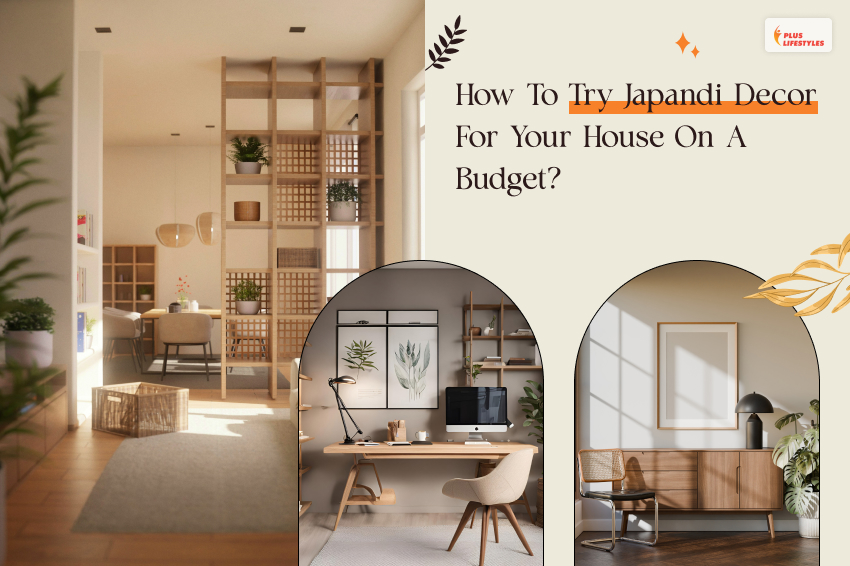
| Quick Answer Japandi decor is an interior style that combines Japan’s minimal aesthetics with the Nordic cozyness. Think about the use of natural materials, low-tone colors, straight lines, and an emphasis on quiet, functional spaces rather than a messy one. Japandi decor can be your cheap alternative, as it depends more on having less, natural textures, and being very selective as you decorate your home rather than just buying expensive furniture. |
The first time someone told me my apartment looked “japandi,” I had to Google it before I could even take the compliment properly.
I would have been decorating on instinct – pulling back on clutter, leaning into wood tones and linen, keeping my color palette quiet – without knowing there was a name for it.
Once I understood what Japandi decor actually was, it explained why my space finally felt calm instead of just empty.
If you’re wondering whether this style is realistic for a real budget and not just a design-magazine fantasy, I promise you it is.
What Japandi Decor Actually Means
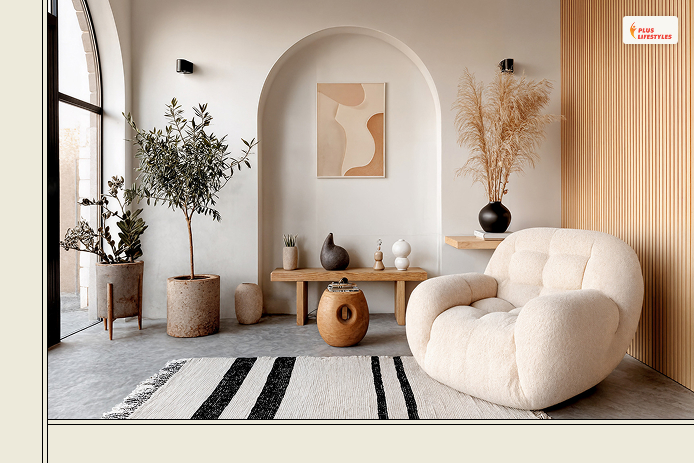
The Japandi interior style fuses design elements of the two different styles:
- Japanese wabi-sabi, which values imperfection and simplicity.
- Scandinavian hygge, or the joy of living: which emphasizes warmth and comfort.
This style is minimalistic but never cold and, at the same time, is cozy without being messy.
Generally, it is characterized by natural wood furniture, neutral and earthy color schemes, lots of empty space, and materials like linen, rattan, and stoneware.
It’s a softer version of minimalism that still focuses on comfort. Sometimes, strict minimalism can feel too cold, but Japandi decor never lets this happen by focusing mostly on creating a home environment of comfort.
Why I Was Drawn To It In The First Place
I wasn’t trying to decorate like that intentionally.
I moved into my first solo apartment a couple of days after a long period where everything in my life felt loud and overstimulating – work notifications, a packed calendar.
My apartment was to be the one place that made the whole world disappear. That was the only thought running through my head at the time.
So, in fact, I stopped buying and started giving away. I threw away items that didn’t bring any joy, took bright throw pillows in exchange for linen ones in warm tones, and left the furniture space that the surface didn’t pack with items.
I realized it only afterward that this instinct for quiet and simple living areas was what the Japandi decor style was actually built on.
The Core Elements Of Japandi Decor
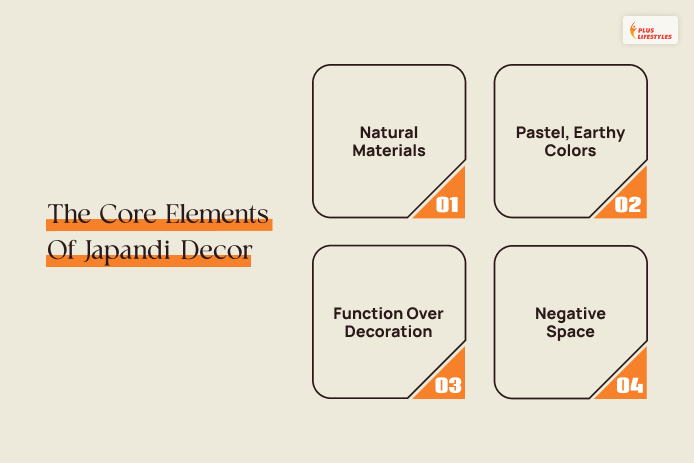
If you want to bring this look into your own space, a few elements do most of the work.
Natural Materials:
Wood, rattan, stone, and linen are basically the base of this style. Mostly, I’ve placed around the room only a wooden coffee table and a woven rattan bamboo basket functioning as a storage unit.
Pastel, Earthy Colors:
Think of dull beige, soft clay, muted sage, and charcoal instead of colorful or vibrant hues. The colors in Japandi decor unquestionably show the most difference from those in maximalism, which prefers the combination of rich tones and patterns than restraint ones.
Function Over Decoration:
Each item occupies a place because of its purpose only. Now, when I buy a new one, I question: is it useful, beautiful, or ideally both? If the answer is neither, I don’t bring it home.
Negative Space:
The lack of objects is considered just another design aspect, not an absence to fix or change. I was honestly convinced it was the hardest part of everything for me.
Mainly when the memory of how I, with a maximalist decor approach, kept the furniture so close to each other as to have almost no space left comes back to me.
Doing Japandi Decor On A Real Budget
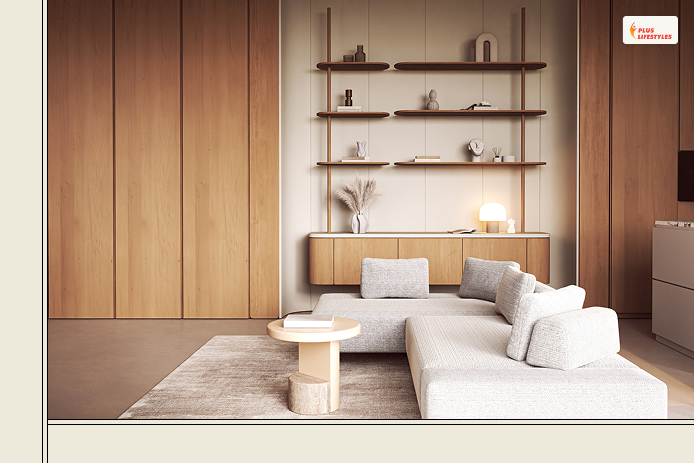
Here’s the part that surprised me most: Japandi decor is genuinely one of the cheaper aesthetics to pull off, because it asks you to buy less, not more.
Start by editing before you shop. Remove anything that feels excessive or purely decorative without purpose. I did an entire pass through my apartment removing decor I didn’t love, and the resulting empty surfaces already looked more “japandi” before I spent a single rupee.
When you do buy, prioritize a few natural-material pieces over many cheap ones. A single well-made wooden stool or a linen throw will do more for the look than five plastic accessories.
Secondhand markets are genuinely great for this style – worn wood and imperfect ceramics fit the wabi-sabi spirit better than anything brand new.
If you’re building this out room by room and want a fuller budget breakdown, I’ve written a separate guide on how to decorate your house on a budget that covers the planning side in more detail.
Where To Start In Each Room
- Living room: Keep your seating simple and your surfaces mostly clear. A neutral rug, one or two wooden pieces, and a single plant go a long way. If your walls feel bare, I would point you toward wall decor ideas for living room spaces that lean natural – think woven hangings or simple framed botanical prints rather than anything busy.
- Bedroom: Linen bedding in a warm neutral, a low wooden bed frame if you can manage it, and soft, indirect lighting. This is where the hygge half of Japandi really shows up.
- Balcony or outdoor space: Even a small balcony can carry the aesthetic through simple wooden planters, a woven outdoor mat, and greenery over anything ornamental.
I’ve picked up a few balcony decor ideas that translate well here – mostly by keeping the plant selection intentional rather than crowded.
I use smart balcony decor ideas inside my home. They translate very well to indoor spaces. I focus on careful plant selection. I keep the arrangements intentional. And I make sure the space never looks crowded.
Japandi Versus Other Styles You Might Be Considering
It helps to know what Japandi decor isn’t, especially if you’re still narrowing down your own aesthetic.
Dopamine decor suits people who love color and pattern. It embraces joyful excess. This style favors more over less. It builds on the exact opposite instinct of Japandi minimalism.
Some people prefer a stricter look. They want architectural minimalism. They do not want the Scandi warmth layer. Pure minimalist home decor fits them better. It skips the signature Japandi softness.
I would suggest browsing a range of aesthetic room ideas before committing to any one label. Styles aren’t rules, and most real homes end up borrowing a little from several.
Adding Personality Without Breaking The Look
The biggest myth about Japandi decor is that it has no room for personality.
Mine is full of it – just quieter. I display things that matter to me (a hand-thrown mug from a trip, a small stack of books I keep meaning to reread) rather than decor bought purely to fill space.
Walls are where I let myself have a little more fun.
I make my own DIY wall decor using pressed botanicals. I place these natural elements into simple frames. This creates a light and organic look on the wall.
Sometimes I want more visual weight in a room. I look at different wall art ideas to anchor the space. I choose woven wall hangings for rich texture. Or I pick a single large abstract print. I always select pieces in muted tones to keep the mood calm.
The key is restraint – one or two considered pieces rather than a full gallery wall.
Common Mistakes When Trying Japandi Decor On A Budget
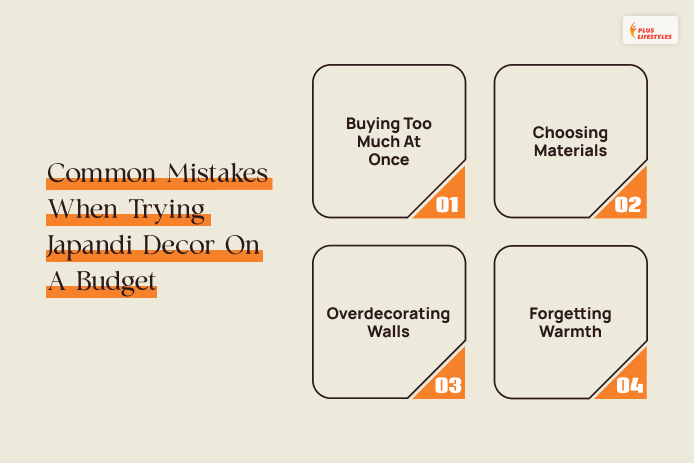
- Buying too much at once: This style depends on editing, not accumulating. Buy one piece, live with it, then decide what’s next.
- Choosing Materials: Pick cheap materials that mimic wood or stone. Laminate and plastic tend to break the illusion. Secondhand real wood is almost always the better budget choice.
- Overdecorating walls: Japandi decor favors a few intentional pieces over a full gallery wall. So, avoid the urge to fill every inch.
- Forgetting warmth: Pure minimalism without soft textiles or warm lighting can tip into feeling cold rather than calm.
Japandi decor found me early. I had no name for it then. Many people experience this same pull. They crave calmer spaces. They seek intentional living.
Besides, you do not need a big budget. You do need patience. You must edit your belongings. Do not accumulate clutter. Develop an eye for materials. Choose things that feel good. Pick items that last over time.