

Skincare routines can easily feel overwhelming.
I know how it feels to stare at a vanity full of serums, acids, and moisturizers. It makes you wonder if every single step is actually doing something for your skin.
For years, many of us skipped facial toner entirely. We associated it with the harsh, alcohol-heavy astringents of our teenage years. Those formulas stripped our skin and left it feeling tight, dry, and burning.
Fortunately, modern skincare has completely changed. Today’s toners do not destroy your skin barrier. Instead, they act as an essential, comforting step to restore, deeply hydrate, and balance your skin.
But, when to use toner in skincare routine?
To get the absolute best results, you should apply your toner immediately after cleansing while your skin is still damp. Doing this during both your morning (AM) and evening (PM) routines will maximize your results.
Understanding how toners work will help you unlock the full potential of your daily routine. Choosing the right formula can truly transform your skin health.
How Does A Toner Work?
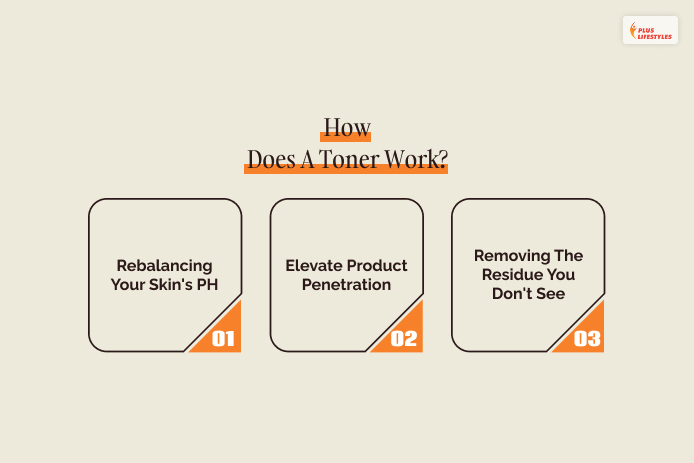
Before I talk about when to use toner in skincare routine, let me tell you how it exactly works. To see why toner is so effective, let us look at what your skin goes through right after you wash it.
Even the gentlest face wash alters your skin’s natural ecosystem. A good toner steps in immediately to fix this issue in three major ways:
1. Rebalancing Your Skin’s pH
Firstly, our skin, by nature, works best when it’s on the slightly acidic side.
Yet, it is the tap water and foaming face washes that disrupt this fragile balance and render the skin over-alkaline. The right toner helps to swiftly restore your skin to its perfect pH level.
Consequently, the strength of your skin barrier is sufficient for you to keep out the acne-causing bacteria and the environmental pollutants.
2. Elevate Product Penetration
Next, let me use a very simple example – one that my dermatologist had used to make me understand how product absorption really works. We can compare your skin to a dry kitchen sponge.
For instance, if you drop thick soap on a bone-dry sponge, the liquid just rests on top – forming a puddle. But when the sponge is slightly wet, it immediately drinks in the liquid.
So, your toner is that first splash of water for your face. It moistens the surface layer of your skin. And this basically allows it to soak up your costly serums much more efficiently.
3. Removing The Residue You Don’t See
Finally, it helps clean your skin. You see, sometimes, a fast cleansing with just water still leaves some traces on your face.
Hard water minerals, heavy metals, or the remnants of a cleanser may still be sticking to your skin.
Think of a toner as that last, mild swipe. It helps to make sure that your skin surface is entirely clean, vibrant, and prepped for the follow-up product application.
When To Use Toner In Skincare Routine?
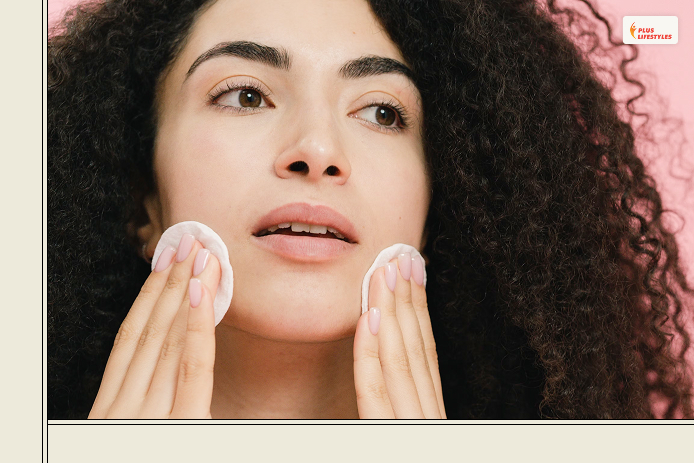
The golden rule of skincare application is simple: always apply your products from the thinnest consistency to the thickest consistency.
Now, toners are watery liquids. So, they always come right after your cleanser and right before your heavier creams.
Your Skincare Routine Order
This should be the basic order of your skincare routine:
- Cleanse: Cleanse your skin to remove dirt, makeup, and impurities.
- Toner: Toners prepare your skin for the next steps of your skincare routine and restore the natural pH of your skin.
- Serums: Serums have potent, active ingredients to help combat various skin problems.
- Moisturize: Moisturizers help to hydrate and repair your skin.
Your Morning (AM) Routine Order
Here’s how your morning routine should look like:
- Cleanse: Cleansing
- Toner: Use the toner to gently tap on your skin.
- Targeted Serum: Vitamin C or brightening serums are great for this step.
- Moisturize: A lightweight lotion, or gel-cream, will help lock in the moisture.
- Protect: Always apply a broad-spectrum sunscreen.
Your Evening (PM) Routine Order
Here’s how your evening or night skincare routine should look like:
- Double Cleanse: First, take off your makeup and sunscreen with a cleansing oil, then wash your face with your usual cleanser.
- Toner: Immediately after washing, use toner to begin hydrating and healing the skin.
- Treatment: Use your targeted actives like Retinol, Niacinamide, etc.
- Night Cream: Repair your skin with rich moisturizing products as you sleep.
Pro-Tip: How You Apply It Matters

Now that you know when to use toner in skincare routine, let me tell you something important!
How you use or apply your toner in your skincare routine matters more than you think. For instance, here are the two methods that you can try:
Hands-On Application (Best Method For Hydration):
The first method is simple. And this is something that I have started using. Place a few drops of the product right into your cleaned palms. After rubbing your hands thoroughly, start by pressing the liquid softly against your face and neck.
Don’t rub – just pat it gently. This approach not only saves the product but also allows your skin to soak it in.
Cotton Pad Application (Best Method For Exfoliation):
Secondly, for an exfoliating toner, I would say that it is best to soak a cotton pad with it. Then use it to gently wipe your skin.
This is a great way to remove dead skin cells. At the same time, it helps steer clear of the delicate area around your eyes.
My Personal Experience With Adult Acne
As a working millennial, I deal with oily skin and adult acne firsthand.
Whenever I broke out, my instinct was to fight it with harsh, drying face washes. However, stripping my skin damaged its protective barrier. And guess what? This irritation made my acne much worse.
However, everything changed when I focused on healing my skin barrier instead.
Adding the Dot & Key Rice Water Probiotics Hydrating Toner to my regimen has been a great decision. This toner contains no alcohol and is made with rice water, probiotics, hyaluronic acid, and a mild form of lactic acid.
And that worked great for my skincare routine targeting acne.
After using it two times a day, I noticed a major decrease in the appearance of my pimples and sores on my face.
Also, the probiotics rejuvenate my skin, and the lactic acid pore cleaning is very gentle. A moisturizing skin barrier does not force the skin to produce more oil.
How To Choose The Right Toner For Your Skin?
Let me tell you the truth – toners are no longer a one-size-fits-all product. And even if you want to try the newest toner in the market after falling in love with the advertisement, chances are it won’t work as you thought.
To see a real change, you must match the ingredients to your specific skin type and current struggles.
| Skin Type | Main Goal | Key Ingredients | What It Does |
| Oily and Acne-Prone | Balance oil and soothe breakouts | Salicylic Acid, Rice Water, Probiotics | Clears out deep pore congestion and reduces angry redness. |
| Dry and Dehydrated | Add deep moisture | Hyaluronic Acid, Glycerin, Rosewater | Plumps skin instantly and removes dry flakes. |
| Sensitive and Irritated | Calm irritation | Centella Asiatica (Cica), Aloe Vera, Chamomile | Soothes burning feelings and repairs a damaged barrier. |
| Dull and Uneven | Brighten skin tone | Glycolic Acid, Vitamin C, Licorice Root | Gently removes dead cells to reveal a fresh glow. |
Hydrating Toners vs. Exfoliating Toners
We need to treat these two categories very differently in our weekly routines:
- Hydrating Toners: These contain gentle, nourishing ingredients like rice water or hyaluronic acid. You can safely use them twice a day, seven days a week, as your daily hydration support.
- Exfoliating Toners: These contain strong chemical acids like salicylic or glycolic acid. You should only use them 2 to 3 nights a week. Overusing them will compromise your skin barrier and trigger more breakouts.
What To Look For In A Toner?
There are a lot of products in the market these days. And it can be very difficult to choose the right one. Here are a few things that I specifically look for when I choose a toner for my skincare routine:
- Non-comedogenic.
- pH-balanced.
- Alcohol free.
- Non-astringent.
- Dermatologist approved.
So, Can A Toner Help Your Skin?
A good toner is a highly useful tool that bridges the gap between washing your face and treating your skin. By picking the right ingredients for your unique face, you keep your skin barrier safe, hydrated, and glowing.
- Always put your toner on damp skin right after washing.
- Layer your products from the thinnest liquid to the thickest cream.
- Use hydrating formulas daily, but save exfoliating acids for night use a few times a week.
- Check your labels to make sure your daily choice is completely alcohol-free.
Disclaimer: Everyone has different skin based on genetics, lifestyle, and climate. If you are struggling with severe, painful acne, please talk to a board-certified dermatologist for professional medical advice.