
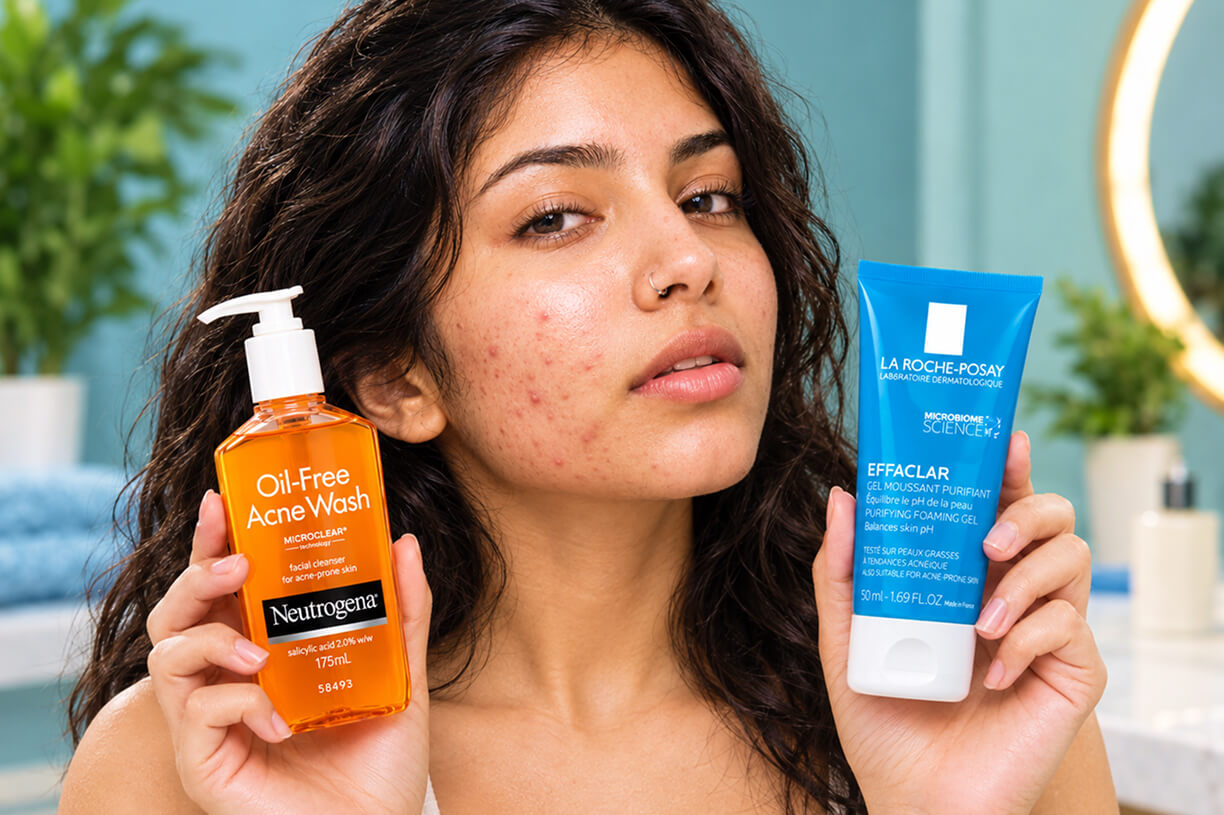
| Quick Answer Each of these brands has its upsides according to the type of skin you have. Neutrogena, for example, gives budget-friendly, highly concentrated products, like strong benzoyl peroxide, which offer quick results while being pocket-friendly. In comparison, La Roche-Posay tends to offer products that are mild and can help to repair and restore the skin barrier. Because of this, if your skin is on the sensitive side, pick La Roche-Posay, otherwise go for Neutrogena if the skin of a person is able to tolerate strong treatments. |
I asked myself this exact question during my first year juggling a packed schedule, bad sleep, and skin that seemed to break out the moment stress levels went up.
I tried both brands over a few months, and the honest answer turned out to be less about which brand is “better” and more about which one actually matches what your skin can handle.
Answering “I Am A College Student. Are La Roche-Posay Products Better For Acne-Prone Skin Than Neutrogena?”
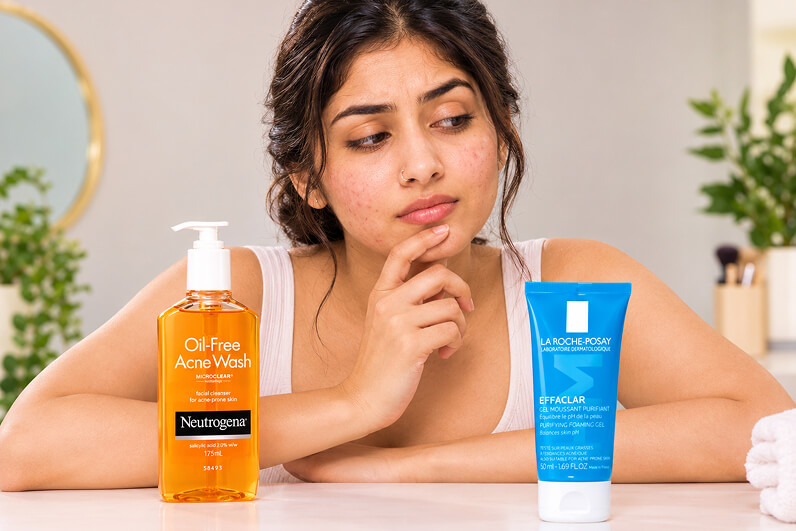
Neutrogena focuses on active, fast-acting acne treatment. Its stronger options, like the Rapid Clear Stubborn Acne Spot Gel, use benzoyl peroxide at concentrations up to 10%, which gives you real firepower against a stubborn breakout but comes with a higher chance of dryness and irritation if your skin isn’t used to it.
La Roche-Posay takes a more measured approach.
Effaclar Duo(+), one of its most recommended acne products, uses benzoyl peroxide at a lower 5.5% concentration, paired with ingredients aimed at reducing redness and the marks left behind after a pimple heals.
It’s generally gentler, though that can mean slightly slower visible results on an active spot.
The Part Nobody’s Actually Talking About: Dark Marks
This is where most comparisons miss something that matters a lot more for Indian skin specifically than it does for the Western audience most of this content seems written for.
Post-inflammatory hyperpigmentation, the dark marks acne leaves behind after it heals, tends to be more pronounced and longer-lasting on melanin-rich skin.
That makes ingredients that address both active breakouts and the marks they leave behind genuinely more relevant here than in markets where this gets treated as a minor afterthought.
La Roche-Posay’s formulations tend to lean more into this dual approach, combining acne treatment with barrier-supporting and redness-reducing ingredients.
Neutrogena’s stronger actives clear active breakouts effectively, but you may need to pair them with a separate treatment specifically targeting dark marks if that’s a bigger concern for you than active pimples alone.
What The Actual Evidence Says
Benzoyl peroxide and salicylic acid are two key substances. They are used in the main treatments for acne. Both brands use them. These substances are supported by real clinical data.
The American Academy of Dermatology states this clearly. They present both as treatment regimens. These regimens show real results for acne.
Benzoyl peroxide targets bacterial infection on the skin. It reduces this infection. This infection is the main cause of acne. Still, we must admit one thing. There is no clinical study showing these brands competing head-to-head.
The combination of active components matters most. The concentration of these components also matters. How faithfully you use them is critical.
The brand name does not matter at all. This approach should be your reference point for this decision. Do not think of it as a matter of brand preference or logo loyalty.
La Roche-Posay vs Neutrogena: What About Indian Skin?
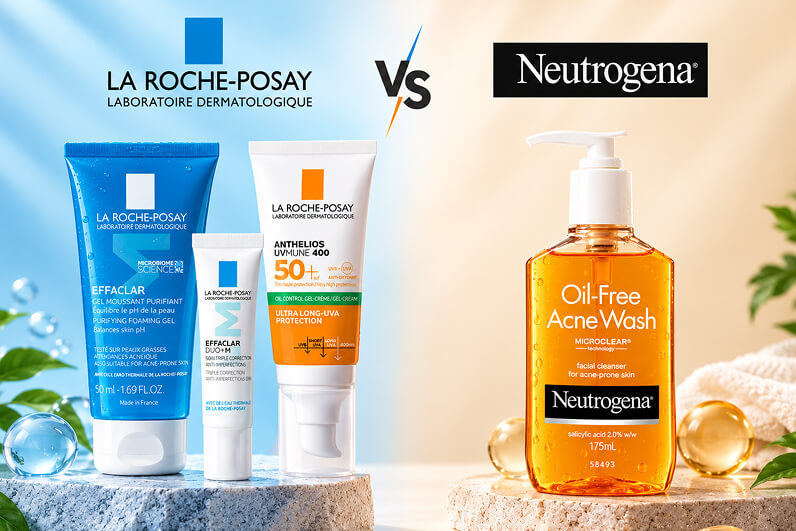
Here’s something worth factoring in before you decide: availability and pricing look very different here than they do in the US.
Neutrogena has a long-established presence in Indian pharmacies and is generally easy to find at a lower price point.
La Roche-Posay is positioned as a premium, more dermatologist-associated brand here, typically available through Nykaa, the brand’s own India site, or select pharmacies, and it costs noticeably more per product.
That price gap matters more for a student budget than most comparisons acknowledge.
If cost is a real constraint, starting with Neutrogena and switching to La Roche-Posay later if irritation becomes a problem is a genuinely reasonable approach, not a downgrade.
La Roche-Posay vs Neutrogena For Acne-Prone Skin
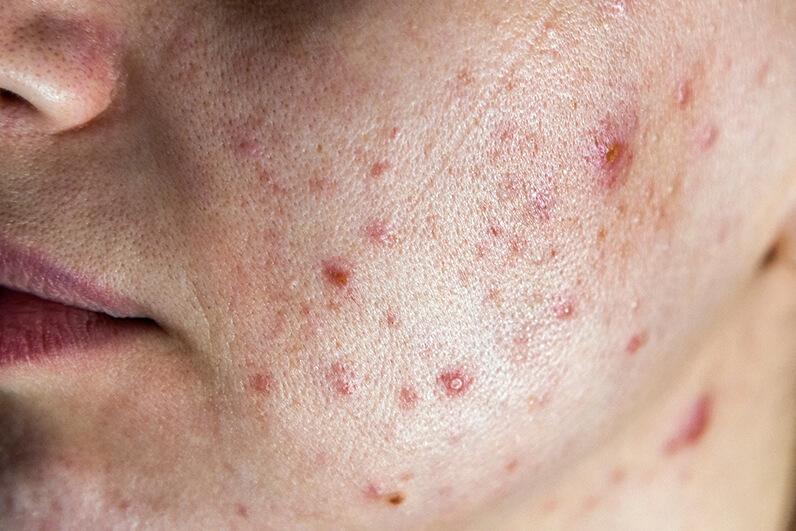
Neutrogena is effective and wallet-friendly. Their cleansers contain Salicylic Acid and Benzoyl Peroxide. These ingredients rapidly deal with active blemishes. If this is your goal, Neutrogena is a better choice than La Roche-Posay.
Some breakouts persist on your skin. They can result in stubborn dark marks for months. In this case, choose a product that combines acne-fighting agents with hyperpigmentation inhibitors.
If you want the maximum punch for your money, Neutrogena is the way to go. You might be willing to spend a little more. You may require a more advanced formula. If you want to treat acne and dark marks at the same time, choose La Roche-Posay.
But let me be very honest: no product will work on your skin unless you have a proper and consistent skincare routine for your acne.
La Roche-Posay vs Neutrogena For Sensitive Acne-Prone Skin
Reactive skin is the last thing you want. The clear winner for sensitive skin is La Roche-Posay.
Neutrogena uses high-strength actives. An example is their 10% Benzoyl Peroxide. These ingredients will very quickly cause redness and peeling. They can compromise your skin barrier if you have reactive skin.
La Roche-Posay creates its formulas using Thermal Spring Water and Niacinamide. They also use smaller, prolonged applications of active ingredients. This approach clears your complexion. It does not sting or cause redness.
If your skin is sensitive, you can spare yourself hours of irritation. You can avoid broken barrier rage. Simply skip Neutrogena and go straight for La Roche-Posay instead.
La Roche-Posay vs Neutrogena For Dry Acne-Prone Skin
Let’s talk about targeting the chin, cheeks, and jawline. These are often dry areas of the skin. Treating this acne is a balancing act. You want the acne to respond without flaring the skin. It would be very easy to cause a flare-up.
Neutrogena’s acne range is quite stripping. It can result in dry, flaky, and more irritated skin.
A very good approach is to provide moisture within acne care. La Roche-Posay does exactly this. The Effaclar range addresses breakouts. It also helps to repair the skin barrier with hydrating lipids.
You might have a tightly controlled budget. If so, the Neutrogena Hydro Boost range can be great for hydration. However, you may want an acne-specific remedy that will not dry out your face. In that case, La Roche-Posay is the safer and more nourishing option.
La Roche-Posay vs Neutrogena For Oily Acne-Prone Skin
Your face might turn into an oil slick by noon. If so, Neutrogena is a good, inexpensive match.
The Neutrogena Oil-Free Acne Wash is formulated with 2% Salicylic Acid. This ingredient literally clears through thick oil. It cleans out the pores while fighting new breakouts. It gives a squeaky-clean sensation. Oily-skinned people find this sensation appealing.
You can purchase good mattifying treatments from La Roche-Posay. However, they are quite a lot more expensive.
Consider a college student faced with excess oil and frequent breakouts. Neutrogena offers the maximum control over oil. It provides excellent pimple-killing properties in a more affordable range.
La Roche-Posay vs Neutrogena For Combination Acne-Prone Skin
Combination skin is tricky because your T-zone is oily and breaking out, but your cheeks are dry or normal.
Neutrogena can sometimes be too harsh for your dry zones if applied all over. La Roche-Posay shines here because its formulations are inherently balanced – strong enough to clear the oily areas but gentle enough not to flay your cheeks.
A pro student move? Mix both.
Use a budget-friendly Neutrogena Salicylic Acid wash just on your oily T-zone, and spot-treat breakouts everywhere else with La Roche-Posay Effaclar Duo to keep your whole face happy.
So, Which One Should You Actually Pick?
Go with Neutrogena if your skin handles strong products, you need fast pimple relief, and you’re on a budget.
But if I have to be very honest, it’s best if you’re okay with sacrificing some long-term skin barrier care in return for quick results that show up right away.
You should pick whichever option aligns with your skin’s immediate needs. Lots of people use both brands and have great experiences.
Pure skin treatment can work wonders for your skin, but only if you get into the habit of following proper skin care steps at night.