
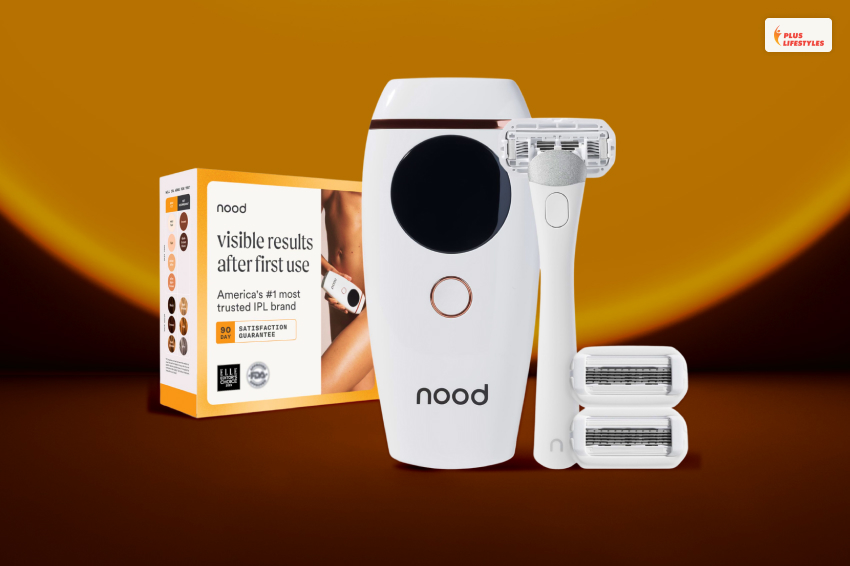
| Quick Answer: Nood Reviews The Nood Flasher 2.0 is a $169 at-home IPL hair removal device that delivers genuine results for the right candidate – light to medium skin tones with dark hair. Used twice a week for eight weeks, most users see up to 80% hair reduction. It lacks the sapphire crystal cooling technology found in pricier competitors, which means sessions run warmer at the highest intensity settings. For budget-conscious women who match the correct skin-to-hair profile and can commit to a consistent schedule, it is the best entry-level IPL device on the market right now. Rating: 4.25 out of 5 |
Four years ago, I spent over $2,100 on a six-session professional laser package. The financial commitment was significant.
The time commitment was brutal – driving across town, waiting 30 minutes for numbing cream to take effect, lying on a clinical table while someone zapped me with an industrial-grade machine.
To make matters worse, the results didn’t last. My hair started growing back a year later, and I was back to square one.
So when I started hearing about at-home IPL devices – specifically the Nood Flasher 2.0 – I was equal parts skeptical and desperate. I had been burned before, figuratively and almost literally. But the $169 price point versus $2,100 was hard to ignore.
I tested it for eight weeks. Here is everything I learned.
Nood Reviews At A Glance: The Honest Pros And Cons
| What Works Well | What Falls Short |
| Best-in-class price at $169 | No sapphire crystal cooling – sessions run hot at Level 7 |
| Informative LED screen tracks mode, contact, and flash count | No protective eyewear included in base kit |
| Auto-Glide Mode covers legs in under 20 minutes | Requires strict consistency – skipping sessions delays results |
| 8-foot power cord allows real freedom of movement | Not suitable for dark skin tones or very light hair |
| 90-day satisfaction guarantee | Subscription enrollment at checkout requires manual cancellation |
| 7 intensity settings for gradual buildup | Corded only – no battery operation |
Nood Reviews: What Is The Nood Flasher 2.0?
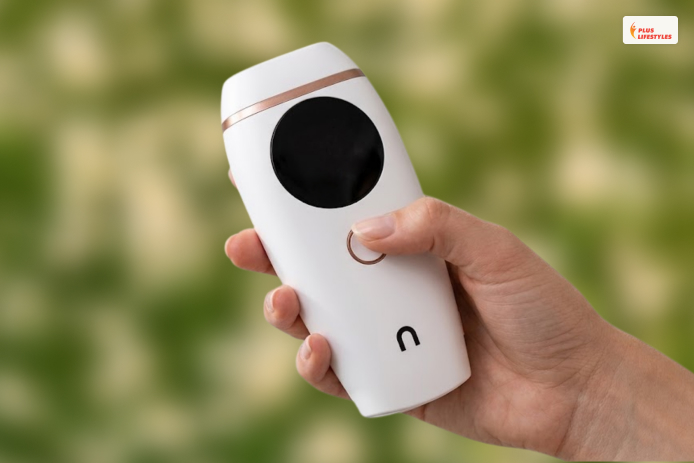
The Flasher 2.0 is Nood’s best-selling at-home hair removal device. It uses Intense Pulsed Light – IPL – technology to target hair follicles and interrupt the hair growth cycle over a series of treatments.
It is not a medical laser, and it does not perform electrolysis. What it does is use a broad-spectrum light flash to target melanin in the hair follicle, converting that light energy into heat that disables the root.
The Flasher 2.0 flashes once per second at 10 milliseconds. That is basically four times longer than similar devices.
This means the light is more likely to be absorbed by your hair rather than your skin – making the treatment both safer and more effective than devices with shorter flash durations.
The science behind it is called selective photothermolysis.
In plain terms: the device targets the pigment in your hair, heats the follicle to the point of damage, and forces it into a dormant state – without meaningfully affecting the surrounding skin tissue. Over multiple sessions, the follicle becomes progressively less capable of producing hair.
Who Can Actually Use It? The Honest Safety Guide
This is the section most reviews gloss over, and it is the most important one. IPL physics are not negotiable.
The best candidates for the Nood Flasher 2.0 have dark blonde, brown, or black hair along with a fair, light, medium, or medium-dark skin tone – Fitzpatrick Types I through IV.
The device needs contrast between the melanin in your hair and the melanin in your skin to function safely and effectively.
| Fitzpatrick Skin Type | Safety and Efficacy Profile |
| Types I–IV (Pale to Medium Tan) | Ideal candidate – highest contrast, maximum results |
| Type V (Dark Tan / Dark Brown) | Use with caution – reduced efficacy, increased heat sensitivity |
| Type VI (Deeply Pigmented) | Do not use – high risk of surface burns |
Who Should Look Elsewhere:
Real blondes, redheads, and anyone with white or grey body hair will see minimal to no results.
There is not enough melanin at the root to absorb the light energy. The device will flash, feel warm, and produce essentially nothing.
Anyone with Fitzpatrick Type VI skin carries a genuine burn risk. The skin itself will absorb the flash instead of the follicle, and no result is worth that risk.
| Caution: The absolute no-fly zones, regardless of skin tone: Never flash over tattoos, large birthmarks, moles, or dense patches of freckles. These are concentrated pigment zones that will overheat immediately. |
How IPL Actually Works
| IPL Stage | What Happens |
| Light Emission | The xenon gas arc lamp emits a broad-spectrum light flash |
| UV Filtering | Thick colored glass filters out dangerous UV radiation |
| Melanin Absorption | The remaining wavelengths target pigment in the hair follicle |
| Thermal Destruction | Light converts to heat, disabling the root and forcing dormancy |
The key word in selective photothermolysis is selective.
When the device is used correctly on the right skin-to-hair combination, the heat is absorbed by the follicle – not the skin around it.
This is why the Fitzpatrick scale is not a recommendation. It is a safety framework built into the physics of how the technology works.
Honest Nood Reviews: My 8-Week Testing Experience
My testing process followed Nood’s recommended protocol: twice weekly sessions for eight weeks, with a mandatory patch test before starting.
Step 1: The Patch Test (Week 0)
Before starting full-body sessions, I ran the patch test Nood requires. I shaved a small area, flashed it at Level 1, waited 24 hours, assessed my skin’s response, then gradually worked up through the intensity levels over several days until I felt discomfort.
My safe operating level was one setting below that point. I ended up comfortably settled at Level 7 – the maximum – for most body areas.
Nood recommends extending this test over a few days to watch for delayed skin reactions. I’d recommend the same. Rushing the patch test is how people end up with irritated skin and bad reviews.
Step 2: Shaving And Prep
You must shave the target area before every session – not wax, not epilate, not pluck. The hair root needs to remain intact beneath the skin surface to serve as the absorption target. Shaving removes the hair above the skin while leaving the follicle in place. Waxing removes the root entirely, leaving nothing for the light to target.
I shaved the evening before sessions and found this gave my skin enough recovery time to avoid post-shave sensitivity during treatment.
Step 3: Auto-Glide Mode For Large Areas
For large areas like legs, manually pressing the button for every individual flash is tedious and slows sessions down significantly.
From what I read on Forbes, and later realized, Nood’s Auto-Glide Mode activates when you hold the flash trigger for four seconds while pointing away from your skin.
Once activated and placed against the skin, the built-in contact sensor detects full contact and fires automatically the moment the lamp recharges.
| Auto-Glide Step | Action Required |
| Activation | Hold trigger for 4 seconds, pointing away from skin |
| Placement | Position treatment window completely flat against shaved skin |
| Contact Sensor | Built-in sensor confirms full contact on the LED display |
| Continuous Flash | Device fires automatically each time the lamp recharges |
This mode allowed me to cover both legs in approximately 20 minutes – while listening to a podcast. That is genuinely compatible with a busy schedule in a way that salon appointments are not.
My Results After 8 Weeks
I used the device at Level 7 twice weekly for the first four weeks leading up to a vacation. My schedule collapsed post-vacation, and I dropped to once-weekly sessions at best for the remaining four weeks.
Despite the inconsistency in the back half of my testing period, I experienced an estimated 80% reduction in overall hair growth.
My knees and ankles still have some stubborn patches – bony areas where the flat treatment window struggles to maintain full contact – but I now shave my legs lightly once every two weeks rather than every other day. For context, I was previously shaving every 48 hours to maintain smoothness.
Both IPL and professional laser hair removal promise up to 80% hair reduction, but the ability to use Nood at home on your own schedule, without booking a salon visit, is a genuine practical advantage for most women.
Head-to-Head Comparison: Nood vs. Top Competitors
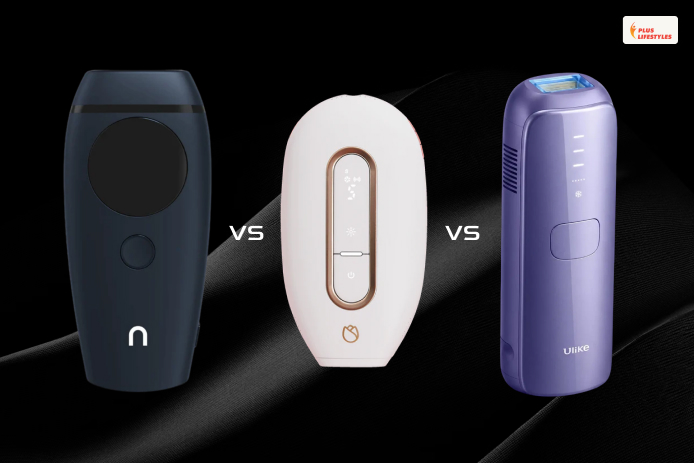
| Device | Sale Price | Warranty | Sapphire Crystal Cooling | LED Display |
| Nood Flasher 2.0 | $169 | 1 Year + 90-day guarantee | No | Yes |
| RoseSkinCo Lumi | $169 | 1 Year | No | No |
| Ulike Air 3 | $259 | 2 Years | Yes | Partial |
Nood vs. RoseSkinCo Lumi
At the exact same $169 price point, these two are the closest direct competitors. Nood won out due to offering better bundles with its ancillary products, and its large display screen – which tells you the mode and power level, confirms skin contact, and tracks how many flashes remain in the device’s lifetime – gives it a meaningful practical edge over the Lumi, which lacks this interface.
Nood vs. Ulike Air 3
The Ulike costs $90 more and includes sapphire crystal cooling technology – a pane of crystal between the lamp and your skin that keeps contact points significantly cooler.
Nood’s Flasher 2.0 lacks sapphire crystal, and its ventilation is not as strong as some competitors, which can create more intense heat coming off the lamp at higher intensity settings.
If you have a low pain threshold or particularly sensitive skin, the Ulike’s cooling system justifies the price difference.
If you are comfortable with the Level 7 sensation – which I would describe as a warm snap, not pain – Nood delivers comparable results at $90 less.
The Truth Behind The Negative Reviews
If you check the Better Business Bureau or Trustpilot for Nood, you will find some alarming ratings. Most of the negative reviews, however, trace back to two specific misunderstandings:
Battery Misconception
Multiple one-star reviews claim the device “arrived dead” or “won’t hold a charge.”
The Nood Flasher 2.0 has no internal battery. It is a strictly corded device that must remain plugged in during use.
The 8-foot power cord provides enough reach for most positions, but if you are expecting a cordless experience, you will be disappointed in a way that has nothing to do with the device’s actual performance.
Light Leakage On Bony Areas
On surfaces like the shin bone, kneecap, or ankle, the flat treatment window cannot sit perfectly flush.
This causes bright light to escape from the sides of the window – which is disorienting and visually uncomfortable.
The fix is simple: wear a pair of inexpensive dark sunglasses during sessions. The device is performing correctly; the geometry of those areas just makes full contact difficult.
The Bundle And Subscription Strategy
The Flasher 2.0 retails at $270 but is consistently available for $169 on Nood’s website.
Nood also sells bundled kits – the Noodist Kit and the Noodist Pro Kit – that package the device with their skincare line, including The Revealer exfoliating scrub and The Reviver soothing aloe post-treatment cream.
| Bundle Strategy | What to Know |
| Upfront saving | Bundles save up to $71 versus buying items individually |
| Automatic catch | Checkout auto-enrolls you in a monthly skincare subscription |
| Workaround | There is no penalty or contract for canceling – do it immediately after purchase |
| Smart play | Buy the bundle for hardware savings, cancel the subscription the same day |
The Nood Serum renews at $31 every 60 days and can be paused or canceled at any time. There is no lock-in. But if you do not actively cancel after purchase, the charges will continue automatically.
Final Verdict: Should You Buy It?
Buy the Nood Flasher 2.0 if you have light-to-medium skin with dark body hair, a comfortable pain tolerance, and the discipline to commit to twice-weekly sessions for the first eight weeks.
At $169 with a 90-day satisfaction guarantee, the financial risk is genuinely low. The time savings – going from shaving every other day to once every two weeks – are real and compounding.
Pass on it if you have deeply pigmented skin, light or red body hair, or a schedule so fragmented that 20 minutes twice a week is genuinely impossible.
IPL requires consistency. Inconsistent use produces inconsistent results, and inconsistent results are how good devices end up with bad reviews.
For the right candidate, this is a 4.25 out of 5 experience – the most accessible, practical entry point into at-home hair reduction available today.