

| Quick Answer Pedicure types range from everyday options like classic, spa, and gel, to foot-health-focused ones like medical and paraffin, to newer precision treatments like Russian and zero gravity, plus a wider category including hot stone, waterless, athletic, acrylic, fish, and themed spa pedicures. Each solves a different problem – the right pick depends less on what looks nice in photos and more on your actual feet, your calendar, and your budget. |
I used to book whatever pedicure was cheapest on the salon app and call it a day.
Then I sat through a Russian pedicure for the first time last year, genuinely confused about why it cost more and took longer than my usual classic one, and realized I had no idea what half these names actually meant.
So I did the digging myself, and this is the breakdown I wish I’d had before I started guessing.
Why Pedicure Types Actually Matter

Not every pedicure does the same job, even though they can look identical once your nails are polished.
Some focus purely on grooming, some on relaxation, and some are closer to an actual foot health treatment.
Picking the wrong one isn’t a disaster, but it does mean paying for something your feet didn’t really need.
This matters more in India than a lot of pedicure content accounts for.
Between monsoon humidity, dusty commutes, and open footwear for most of the year, Indian feet deal with a different set of stresses than what a lot of Western pedicure guides are written for.
Knowing your pedicure types helps you actually treat that, not just decorate over it.
The Everyday Pedicure Types
Here are some of the most common and everyday pedicure types that you need to know about. And yes, in case you were wondering, all of these are available in Indian salons:
Classic Pedicure
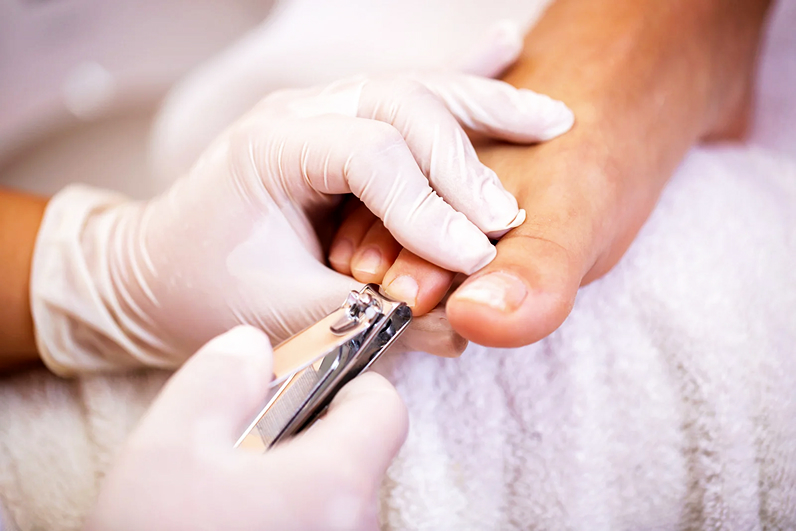
This is the baseline – like a classic French pedicure. And it’s what most of us mean when we just say “pedicure.” Soak, trim, cuticle care, scrub, polish.
It’s affordable, quick, and genuinely enough for most people most of the time. If you’re only getting a pedicure to stay maintained, don’t overthink it beyond this one.
Spa Pedicure
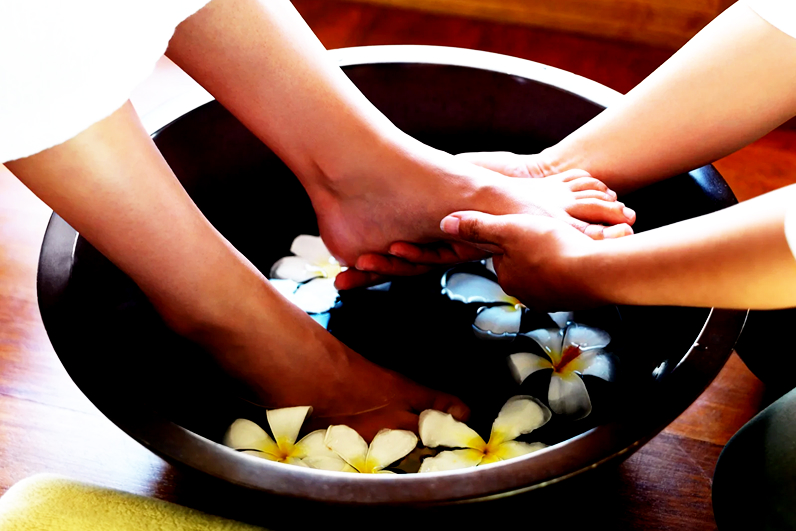
The same steps as classic, stretched out with a longer massage, warm towels, and often an exfoliating mask.
Deciding whether a spa pedicure is worth the extra spend comes down to a choice. It is a question of how much you need physical foot care. AND it is also about whether you need an hour to switch off from work.
Gel Pedicure
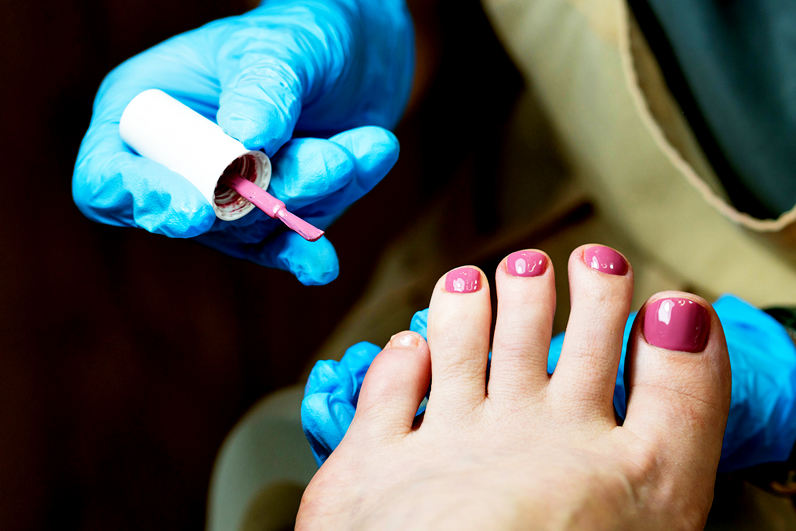
Gel polish is cured under a UV or LED lamp and resists chipping far longer than regular polish.
This is the one I reach for before a trip or a wedding season stretch when I know I won’t have time for a touch-up. It costs more per visit, but you’re paying for fewer visits overall.
Pedicure Types Built Around Real Foot Concerns
Dermatologists consistently flag hygiene as the bigger issue across every pedicure type, not just the medical ones.
According to the American Academy of Dermatology, infection risk comes down mainly to how well tools and foot baths are disinfected between clients, not which specific treatment you choose.
It’s a good filter to apply before booking anywhere: ask how they clean their equipment, not just what’s on the menu.
Medical Pedicure

This one skips the pampering language and focuses on actual foot problems: thick calluses, cracked heels, ingrown nails.
It’s usually done with stricter hygiene protocols and sometimes by someone with podiatric training rather than a general nail technician.
If you’re dealing with a recurring issue rather than just wanting nice toes, this is the pedicure type worth asking your salon about specifically.
Paraffin Pedicure
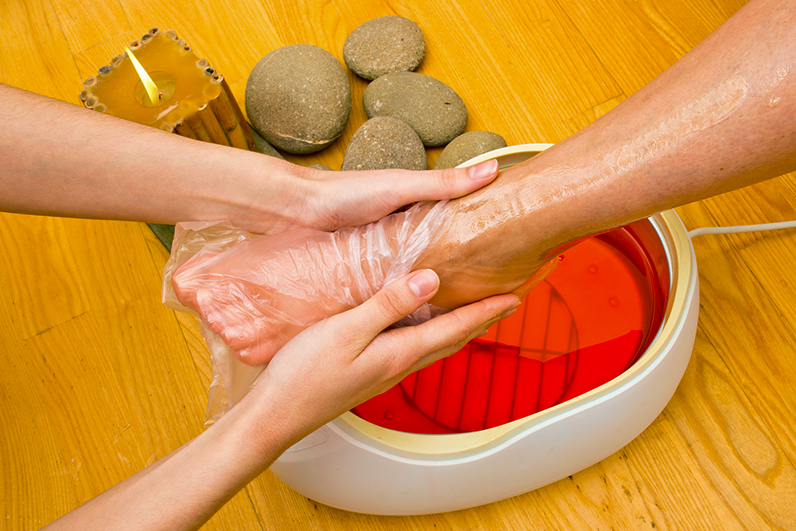
A warm wax dip added to a regular pedicure, mainly for deep moisture. Genuinely useful during Indian winters in the north, or for anyone whose heels crack badly from a lot of walking or standing.
The Newer Pedicure Types You’re Probably Seeing Online
If you’ve been noticing these two show up more on Instagram and salon menus lately, that’s not your imagination.
They’re genuinely newer additions to most Indian salons’ offerings. And most existing pedicure content online hasn’t caught up to covering them properly yet.
Russian Pedicure
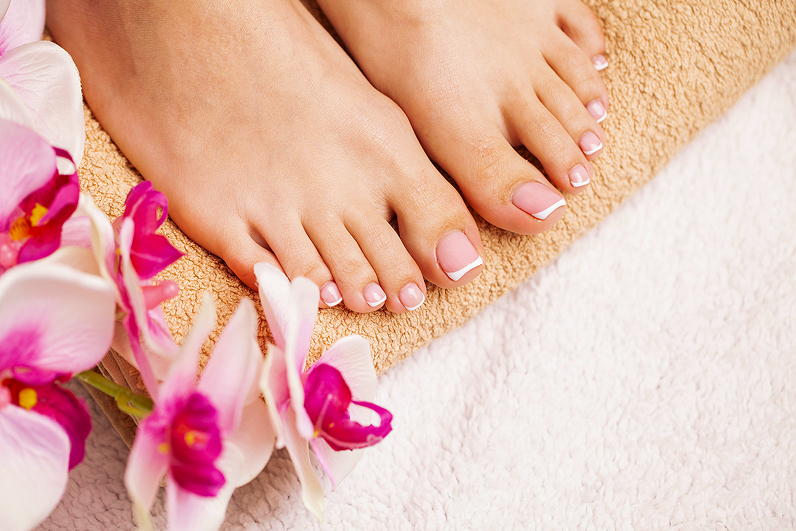
This is the one that actually surprised me. Instead of soaking your feet first, a Russian pedicure uses a dry technique with an electric file to work on the cuticles, calluses, and nail edges with far more precision than a standard scrub.
It’s more thorough, takes longer, and tends to leave results that last noticeably longer between visits. It’s also pricier, so it’s worth it mainly if you already know regular pedicures don’t hold up well on your feet.
Zero Gravity Pedicure
This one’s less about the foot treatment itself and more about the setup. You recline in a zero-gravity chair, often with a blanket, eye mask, and sometimes a scalp or shoulder massage layered in, while the actual pedicure work happens in a reclined, weightless position.
A zero-gravity pedicure is frequently paired with a Russian pedicure at the same appointment. That is mainly because both lean toward the higher end of the price range, and the same salons tend to offer both together.
Other Pedicure Types You’ll Come Across
Beyond the ones most people actually book, a handful of other pedicure types show up often enough in salon menus and online content that they’re worth knowing, even if they’re less common in everyday routines.
Hot Stone Pedicure
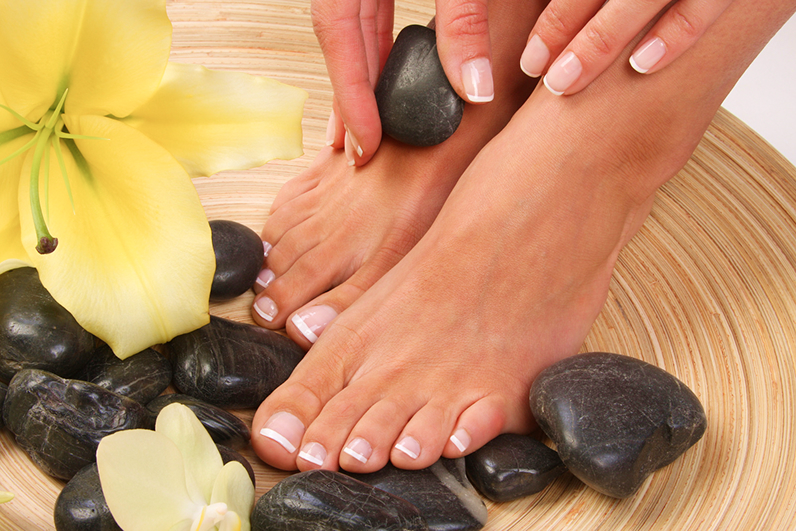
Heated stones are used during the massage portion, mainly for circulation and muscle tension. It’s less about the nails and more about the massage itself. So it suits anyone booking a pedicure primarily to unwind rather than for grooming.
Waterless Or Dry Pedicure
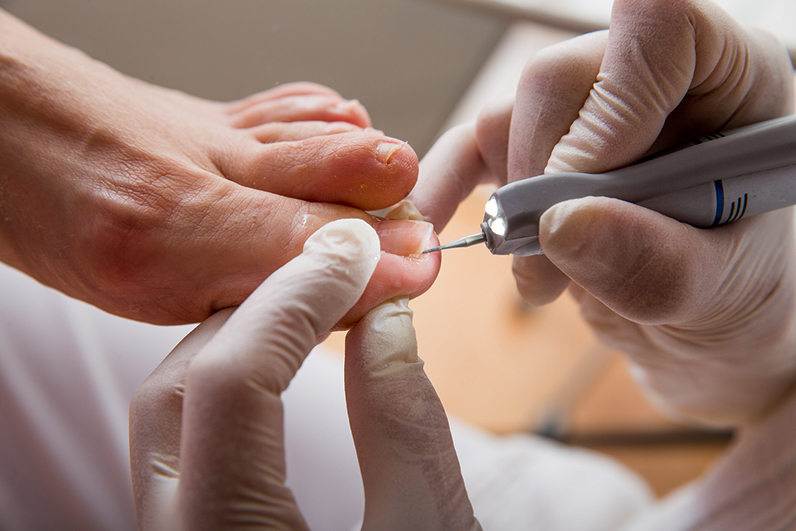
This is really a category rather than a single treatment, and both Russian and zero gravity pedicures fall under it. Instead of a foot soak, the technician works on dry skin using files and tools.
It tends to be more precise. And for people with certain skin conditions or diabetes, some podiatrists actually prefer this approach. Why? Well, because it avoids prolonged water exposure altogether.
Athletic Pedicure
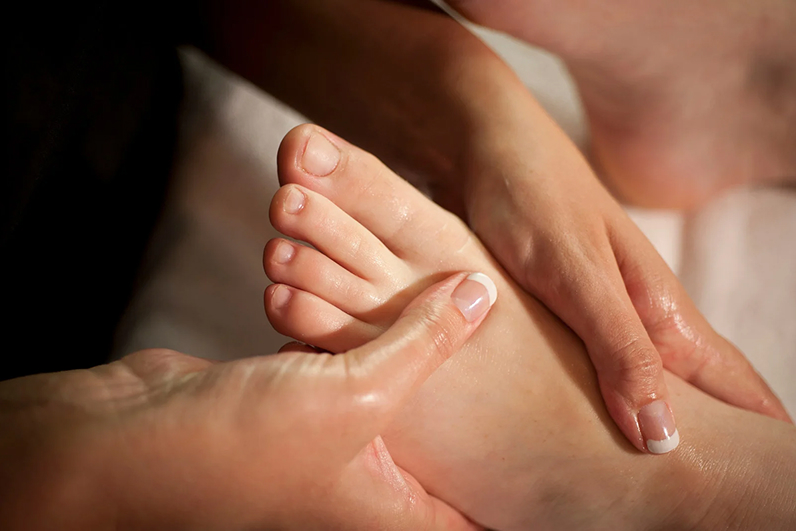
Built for people who are on their feet constantly – runners, gym-goers, anyone dealing with recurring calluses from sport. It usually includes deeper attention to pressure points and sometimes cooling agents like peppermint or eucalyptus to soothe sore muscles.
Acrylic Pedicure
These are less common than acrylic manicures, but it exists. In this type of pedicure, artificial extensions are applied to the toenails, usually for length or a specific nail art look. Not something most people need functionally, but it comes up in some nail art-focused salons.
Fish Pedicure
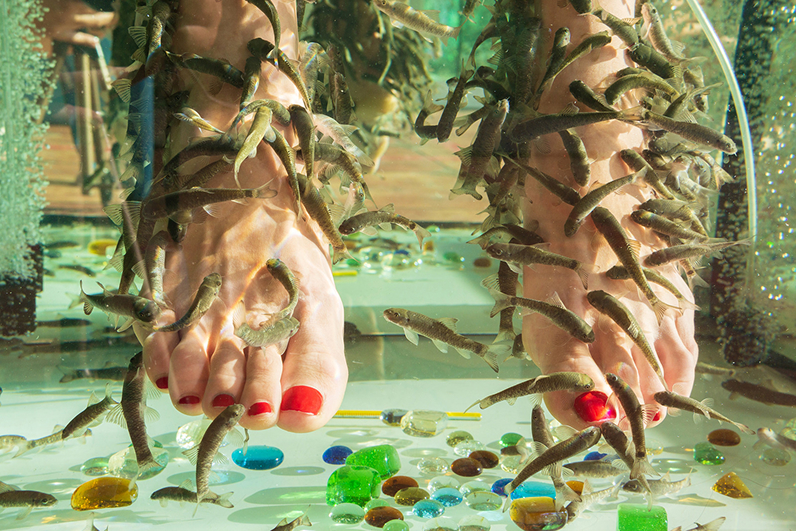
Small fish called Garra rufa are used to nibble away dead skin instead of a scrub or file.
I’d flag real caution here: several regions have banned fish pedicures outright over infection concerns. This is mainly because the same tub is used across multiple clients and can’t be fully sterilized between sessions the way tools can.
But yes, worth knowing it exists, but worth being genuinely careful about where and whether you try it.
Novelty And Themed Pedicures
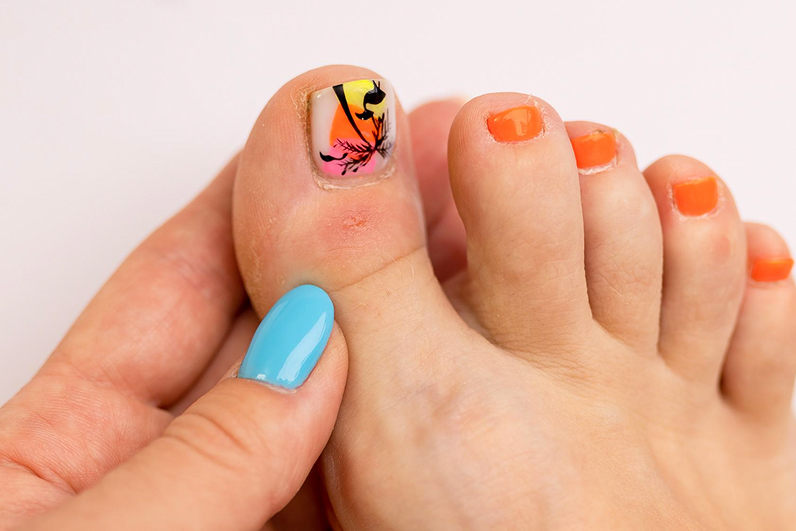
Chocolate, wine, milk and honey, margarita, ice cream – these all sound like distinct pedicure types. But structurally they’re a spa pedicure with a themed soak, scrub, or mask swapped in.
The base treatment underneath is the same; the theme is really about the sensory experience rather than a different technique.
Matching Pedicure Types To Your Actual Life
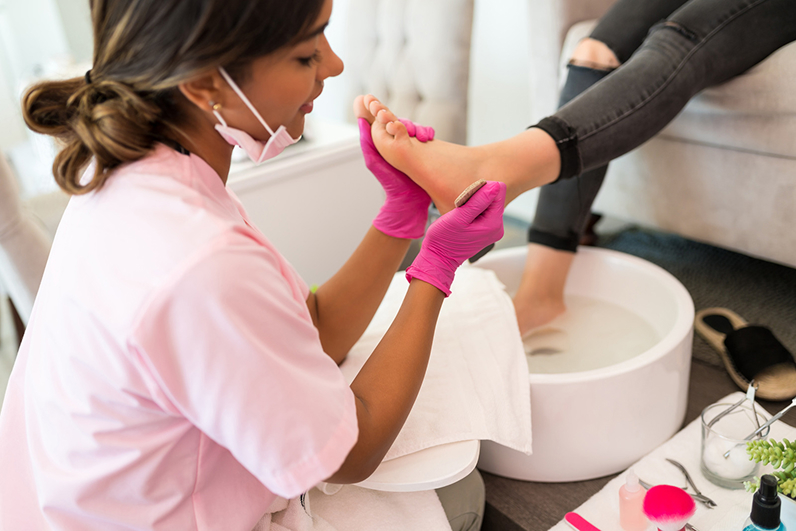
I’ve stopped picking a pedicure type based on what looked appealing that week and started picking based on three things:
- how much time I have,
- what my feet actually need right now,
- what I’m willing to spend.
If you’re short on time and your feet are in decent shape, a classic or gel pedicure covers you. Now, let’s say you’re dealing with a specific issue like cracked heels or thickened skin. In that case, look for a medical or paraffin option instead of a generic spa upgrade.
And if you want an actual reset, not just maintenance, a Russian or zero gravity pedicure delivers something the basic options don’t, at a cost that reflects that.
Before booking anywhere, it’s worth knowing what you’re actually paying for. If you’re unsure how much a pedicure should cost for the type you want, or how long a pedicure takes depending on which one you pick, checking with the salon directly beats guessing from a generic price list, since costs vary a lot by city and salon tier in India.
Making It Last Between Visits
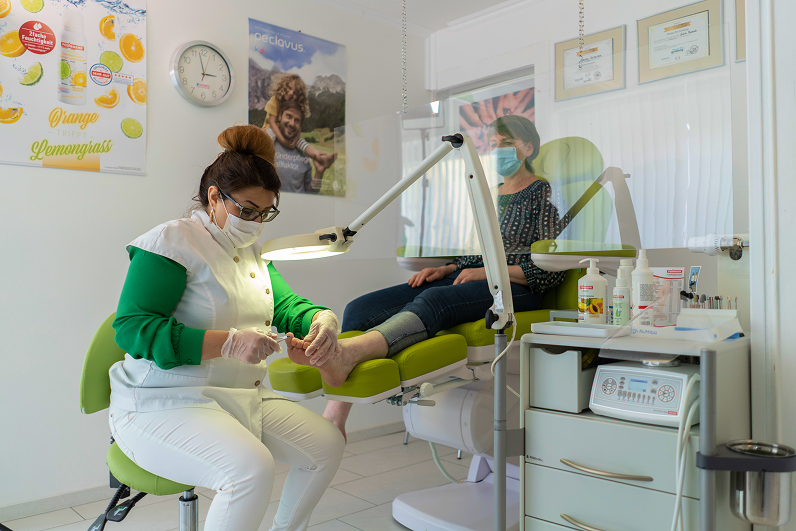
Whatever pedicure type you go with, it won’t hold up if you’re not doing anything at home in between.
A basic routine of moisturizing, wearing open footwear when you can, and not waiting too long between trims makes a real difference.
If you want the fuller breakdown, I’ve covered how to do a pedicure at home separately, which is worth bookmarking for the weeks you can’t make it to a salon.
It’s also worth knowing how often you should get a pedicure based on the type you’ve chosen, since a Russian pedicure holds up longer than a classic one, and pushing any of them too far past their natural window just means starting from a worse place next time.
My Verdict On The Different Pedicure Types And Choosing The Right One
Once I actually understood what separates these pedicure types, booking one stopped feeling like a guessing game.
It’s less about chasing whatever’s trending and more about matching the treatment to what your feet are dealing with that particular month.
Start there, and the rest – classic, gel, medical, Russian, or zero gravity – becomes a much easier decision.