


| Quick Answer Millennials and Gen Z homeowners are investing more money and time into remodeling their modern bathroom design. This shift is happening because the room is no longer seen as purely functional. Instead, it has become a personal wellness sanctuary. New industry data confirms this evolving trend. Bathrooms have officially matched kitchens as the most frequently remodeled room in the house. This change is driven heavily by younger consumers. They are actively demanding upscale spa amenities and high-tech smart gadgets. They are also investing heavily in personalized decor for their own daily comfort rather than future resale value. |
I didn’t expect my bathroom to become the room I cared about most when I finally had a space of my own to renovate. I assumed it would be the living room – the “show” space, the one guests actually see.
Instead, I found myself obsessing over tile samples, lighting temperature, and whether a rain showerhead was a reasonable expense for a one-bathroom apartment. Turns out, I’m not alone. A lot of women my age are doing exactly this, and the data backs it up.
The Data Behind The Shift: Why Gen Zers And Millennials Care About Their Bathroom
This is not just a trend or a vibe picked up from Pinterest. It is grounded in solid data. The figures come directly from the 2026 U.S. Houzz & Home Study.
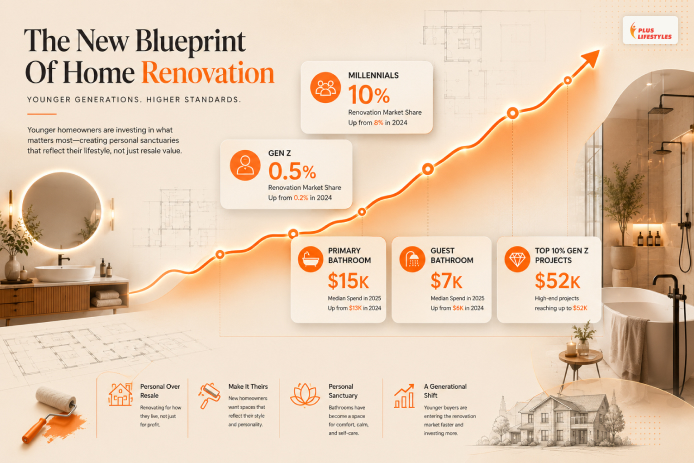
This study clearly documents that the demographics of remodeling are changing. A much larger number of home renovations are being tackled by millennials. In fact, their share of the market has grown from 8% to 10%.
Gen Z is also entering the renovation market quickly. They now represent 0.5% of all renovating homeowners. This is a notable increase from just 0.2% in 2024.
The Gen Z segment more than doubled in a single year. This rapid rise makes them the fastest-growing group in the market. Young adults are diving into home improvement much sooner than expected.
Bathrooms have become a much bigger part of the story. Industry tracking shows they have caught up to kitchens. Both are now the most commonly renovated spaces.
The money reflects this major shift. The median spend on a primary bathroom rose to $15,000 in 2025. This is up from $13,000 the year before. Guest bathroom spend also climbed to $7,000 from $6,000.
Gen Z homeowners are spending less overall than millennials. However, a notable share are pushing into higher-end territory. The top 10% of Gen Z projects reached as high as $52,000.
What’s driving it isn’t just financial readiness.
A majority of younger homeowners are renovating for personal reasons. They have just bought a home. They want to make it feel like theirs.
And guess what? They are not doing this to prepare for a sale. The perspective on home improvement is changing. The focus has moved from a “resale investment” to a “personal sanctuary.”
This mindset shift is the heart of the movement. It explains why this generational shift is happening right now.
It’s Not About Resale Value Anymore
I think this is the part that separates how my generation approaches bathrooms from how our parents did.
A bathroom used to be a “safe” renovation choice. It was always kept neutral and functional. The space was designed to appeal to a future buyer. It was rarely built for the person actually living there.
That old math has completely flipped for a lot of us.
When I remodeled my own bathroom, resale value never crossed my mind. I wanted a space that felt like an actual retreat. It needed to comfort me at the end of a long workday.
I focused heavily on good lighting and warm materials. I wanted a room that did not feel like an afterthought. It should not feel squeezed in next to the bedroom.
Industry reports strongly back up this trend. A forever-home mentality is now the leading motivation behind renovations. People are moving away from flip-and-sell thinking. Bathrooms are now treated as wellness spaces instead of purely utilitarian ones.
Wellness, Smart Tech, And A Little Bit Of Drama
A few clear threads run through what’s actually being requested in bathroom renovations right now, and millennials and Gen Z are at the center of most of them.
Smart technology is a major driver of this change. Younger homeowners are increasingly requesting bidets and high-tech toilets. This information comes from recent National Kitchen + Bath Association trend reporting.
Wellness-oriented layout planning is also gaining rapid traction. People want better lighting design and biophilic touches. This means incorporating natural light, live plants, and organic materials.
Millennials are leading the charge for these specific updates.
Professional trend surveys identify them as strong advocates. They consistently choose both smart tech and biophilic bathroom design.
At the same time, there is plenty of room for personality. Designers are seeing a major rise in specific requests. Clients want bold colors and vibrant patterns.
Many people are choosing vintage-inspired fixtures. Colorful sinks are also growing in popularity. Homeowners are picking highly expressive tile choices. These design elements would have felt too risky a decade ago.
This shift serves as a great reminder. A “modern” bathroom does not have to feel sterile. It does not need to be minimal by default.
Modern spaces can lean easily into maximalist decor. Alternatively, they can just as easily lean into something quieter.
Top 12 Modern Bathroom Design Ideas
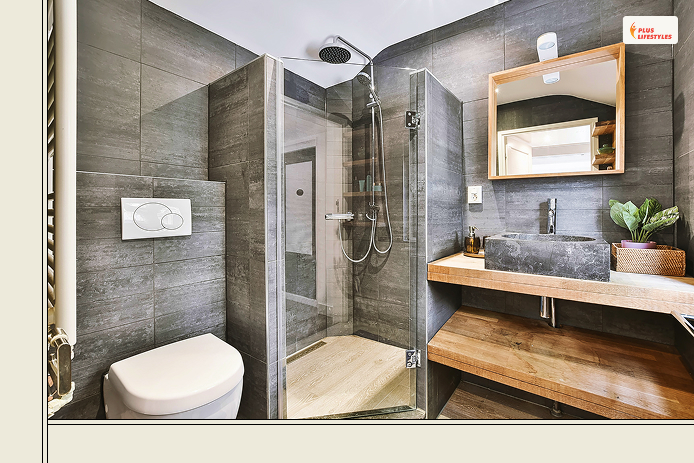
If you’re thinking about updating your own space, here’s where I’d start looking, based on both the current data and what’s actually worked in my own home.
Warm, Earthy Neutrals Over Stark White.
Most interior designers now prefer earthy and warm colors. They see them as the main bathroom color scheme. Consequently, they are getting rid of the cold, pure white look. That style was highly prevalent during the last ten years.
Wood-Toned Vanities.
Wood vanities have officially become the favorite choice. They look much warmer to the eyes compared to white. Otherwise, white can make a room look too clinical.
Layered Lighting.
Ambient, task, and accent lighting used together rather than a single overhead fixture – this alone transformed how my bathroom felt.
Frameless Glass Showers.
Now standard in the vast majority of new bathroom installs, largely because they make small spaces feel bigger.
Wet Rooms.
An increasingly common layout choice, especially in smaller bathrooms where a separate shower enclosure eats up valuable space.
Freestanding Soaking Tubs.
Still the centerpiece of high-end remodels and a strong signal of the “sanctuary” mindset driving this trend.
Handmade Tile, Especially Zellige.
Textured, imperfect tile finishes are showing up constantly in 2026 trend roundups for the personality they add.
Smart Toilets And Bidets.
The single most-requested smart feature among younger homeowners specifically.
Antimicrobial, Low-Maintenance Surfaces.
A practical trend as much as an aesthetic one – less cleaning, healthier surfaces.
Curbless, Accessible Shower Entries.
Originally driven by aging-in-place needs, but increasingly adopted broadly for the clean, open look.
Statement Color Moments.
A colored sink, tub, or vanity as a single bold gesture rather than an all-over pattern – this is where dopamine decor sensibilities are showing up in bathrooms specifically.
Biophilic Touches.
Real plants, natural light, and organic textures brought into a space that’s traditionally been the most closed-off room in the house.
Making It Work On A Smaller Budget
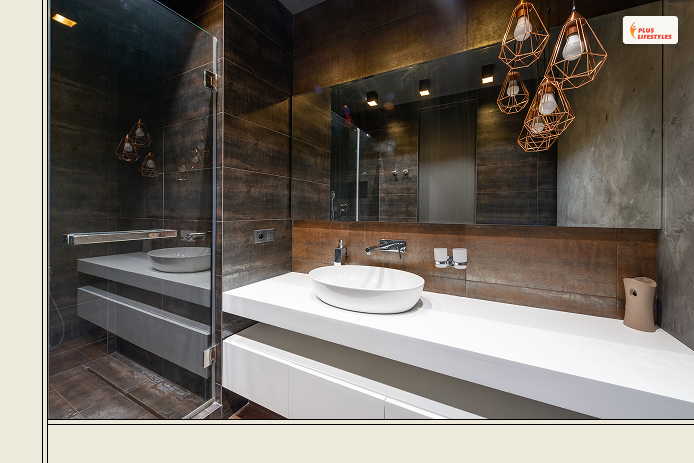
You might not be one of the lucky few with a $15,000 renovation budget. I know – the money while we are in the middle of the Great Millennial Career Crisis!
You are totally justified in feeling that this is perfectly fine. Many of the best design changes are actually the cheapest ones.
Suddenly, you might realize your home office is not your only important room. There are still plenty of ways to spruce up a bathroom. You can use small details without spending a lot of money.
Installing new hardware or adding fresh paint makes a big difference. You can also swap out light fixtures or introduce a few nice textiles. These simple items completely change the overall feeling of the space without a full gut remodel.
Similarly, your home wall decorating ideas should work well in the bathroom. Large-scale, colorfully placed pieces are highly effective. A few well-picked items work much better than filling every single surface.
For instance, I often hang a small framed print as bathroom wall art. I swap these pieces out from different parts of my apartment. I also style a woven piece near the mirror. And I only choose items that will not be damaged by high humidity.
Modern Bathroom Design: Finding Your Own Bathroom Aesthetic
Bathrooms are nowadays seen as extensions of individual aesthetics. They are no longer treated as mere neutral, functional spaces.
Therefore, instead of hurrying towards a decision, take time to reflect on your personal preferences. You should let those personal preferences guide your design choices.
For example, you might tend to favor minimalism and serenity. If so, the Japandi decor style can be a great fit for your space. Several small details are capable of quietly making a strong statement.
Some of the things that can actually do a lot of quiet work are:
- Natural wood.
- Stone.
- Linen towels
If you want something closer to minimalist home decor, strip back to just what’s functional and let negative space do the rest.
And if neither of those feels like you, there’s nothing wrong with looking at broader aesthetic room ideas and pulling in a bit of drama – a bold wallpaper, colorful fixtures, or a gallery of small wall art ideas above the vanity.
Even a balcony decor ideas mindset – treating a small, often-overlooked space with the same intention as a main room – applies well here. Bathrooms are small enough that even modest choices read as a complete design statement.