
| Quick Answer Diabetic foot care comes down to four habits: checking your feet daily for cuts, cracks, or redness; washing and moisturizing them properly (minus the areas between your toes); trimming nails straight across instead of rounding them; and choosing footwear that protects rather than just looks good – all backed by steady blood sugar control. None of this takes more than five minutes a day, but skipping it is exactly how a small cut turns into a wound that takes months to heal. If you’re someone who also enjoys a regular pedicure, that habit doesn’t have to disappear either – it just needs a few precautions built in. |
My grandmother has been managing diabetes for eleven years now, and until this January, I genuinely thought I understood what that meant. Watch the sugar, take the metformin, get the HbA1c checked twice a year. Done.
Then, during a routine visit, her doctor spent almost ten minutes just looking at her feet. Pressing a little plastic filament against her sole, asking if she could feel it. Checking between her toes. Asking about the socks she wears to sleep.
I’m turning 30 this year, and I’ll admit – I sat in that clinic hallway and felt a version of my own future tap me on the shoulder.
Because diabetes doesn’t stay confined to a blood sugar number on a report. It reaches all the way down to your feet, and most of us have no idea how far.
Diabetic Foot Care: Why Diabetic Feet Need A Different Kind Of Attention
Here’s the part nobody explains clearly enough: diabetes doesn’t just raise blood sugar.
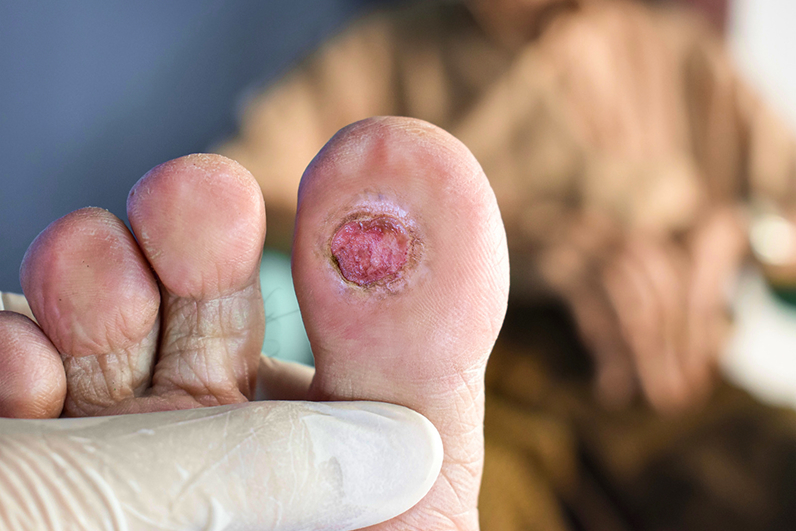
Chronic diabetes causes nerve damage in your feet, known as foot neuropathy. This condition diminishes your foot sensation and reduces your ability to feel pain. At the same time, diabetes impairs your blood circulation. Poor blood flow directly delays your healing process.
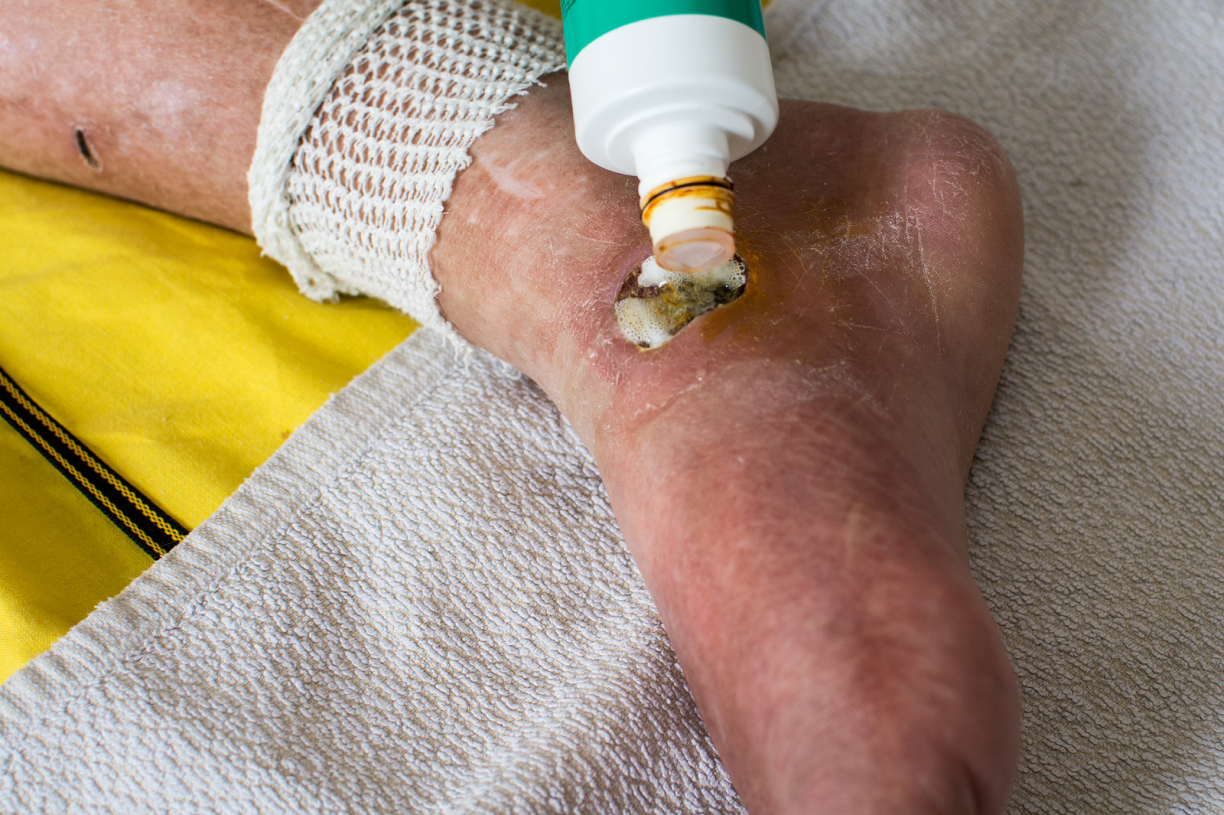
A numb foot cannot sense a new injury. Your body also heals these injuries much more slowly. Because of this, a small blister silently turns into a dangerous ulcer. Average people usually ignore these minor blisters.
Foot ulcers affect 15% to 25% of diabetic patients in India, reports ISPOR. These ulcers precede most Indian foot amputations. However, early detection can prevent these amputations entirely.
Diabetes affects 90 million Indian adults, making India rank second globally behind China. Alarmingly, half of these patients do not even know they have diabetes. [Source: International Diabetes Federation (IDF) Diabetes Atlas]
Working women typically schedule family doctor visits. Unfortunately, busy caregivers often omit their own foot care from the checklist.
The Daily 5-Minute Check
This is the single habit that matters more than any cream, gadget, or supplement. Every day, ideally after your bath or right before bed, take a proper look at both feet:
- The soles: Use a small mirror or your phone camera if bending down is hard on your knees. You’re scanning for redness, swelling, or anything that looks like a fresh cut.
- Between the toes: This is where moisture hides, and fungal infections quietly start.
- Around the nails: Ingrown edges, discoloration, or any thickening worth flagging to a doctor.
- The tops and sides: New calluses or bumps that weren’t there last week.
If you spot anything that hasn’t healed within a day or two, that’s not a “wait and watch” situation – that’s a same-week doctor visit, not a next-appointment one.
Washing, Moisturizing, And Nail Care: The Do’s And Don’ts
Wash your feet daily in lukewarm water, never hot – neuropathy can mean you won’t actually feel water that’s scalding you.
Pat dry gently rather than rubbing, and dry thoroughly between the toes, since leftover moisture there is an open invitation for fungal infection.
Moisturize the tops and soles daily to prevent the dry, cracked skin that can turn into an entry point for bacteria. Skip the area between the toes with the cream – that’s the one spot you want to keep dry.
For nails: trim straight across, never in a curve, and leave a small margin of white nail rather than cutting close. Skip cuticle cutting altogether.
And this genuinely can’t be overstated – never use a blade, razor, or “corn cutter” on your own feet. Leave anything sharp to a professional who knows your history.
What About Footwear?
This one gets overlooked constantly. Walking barefoot at home, wearing tight-strapped sandals, or squeezing into shoes that “will loosen up eventually” are some of the most common ways small injuries start.
Closed, cushioned, well-fitting shoes with socks (seamless ones, ideally) are the safer daily default. And it’s worth shaking out your shoes before putting them on – checking for anything you might not feel underfoot.
The Pedicure Concerns With Diabetic Foot Care

This is where I get asked the most, because pampering yourself and protecting your feet can feel like they’re pulling in opposite directions when you have diabetes. They’re not – you just need a plan.
Podiatrists are fairly consistent on this: a pedicure isn’t automatically off-limits, but it stops being purely cosmetic and becomes something you plan for.
If you have neuropathy, poor circulation, or a history of foot ulcers, that conversation needs to happen with your doctor first, not your nail technician.
At-Home vs. Salon Pedicures
If you do get the go-ahead, here’s how I would approach it.
I’ve actually written out the full step-by-step for how to do a pedicure at home, which is genuinely the safer route for a lot of diabetics since you control the water temperature, the tools, and the hygiene from start to finish.
If you’d rather go to a salon, insist on your own sterilized tools, lukewarm water, no cuticle cutting, and always disclose your diabetes to the technician before they start.
Understanding Different Pedicure Types
A few of the more elaborate treatments are worth knowing about specifically. A French pedicure or a Russian pedicure both involve more aggressive tool work around the cuticle and nail bed than a classic pedicure. That’s something to flag or avoid if you have reduced sensation.
A zero gravity pedicure, on the other hand, is mostly about the reclined seating and massage, so it’s usually gentler on the actual foot. If you’re unsure which category something falls into, I’ve broken down the different pedicure types in more detail separately.
For anyone with a higher-risk foot, though – any history of ulcers, numbness, or circulation issues – a medical pedicure is genuinely the better call over a regular salon visit. It’s performed by a trained professional in a sterile setting with your medical history factored in, not just your nail polish preference.
Frequency, Timing, And Costs
As for frequency and logistics once you’ve got the green light, I get asked how often you should get a pedicure and how long a pedicure actually takes fairly often.
And the honest, unglamorous answer for diabetics is: less frequently than you’d assume, and always unrushed.
If cost is part of your decision-making, I’ve also laid out how much a pedicure costs across salon tiers versus the medical-pedicure route in my previous article. So, check that out!
When To Stop Waiting And See A Doctor
There’s a version of “I’ll keep an eye on it” that’s reasonable, and a version that’s genuinely risky.
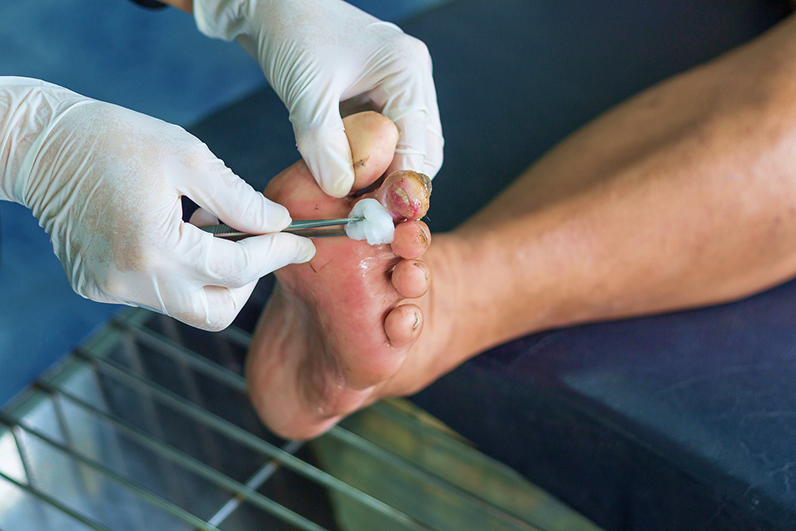
Redness that’s spreading, any drainage, swelling that wasn’t there yesterday, a wound that hasn’t visibly improved within 24-48 hours, or any patch of skin that’s turned a different color – none of that is a wait-and-see situation.
Early treatment for a diabetic foot wound is almost always simpler than delayed treatment. And the difference in outcome is not subtle.
The Realistic Weekly Framework For Diabetic Foot Care
If daily inspection and salon rules feel like a lot to hold onto, here’s the stripped-down version I now follow with my grandmother:
- Every day: Look at both feet, wash and dry properly, moisturize (not between the toes).
- Once a week: Check your footwear for wear and tear, and glance over your nails for anything that needs trimming.
- Every 4-6 weeks (if cleared for it): A pedicure, salon or home, with the precautions above.
- Every 3-12 months: A proper foot exam with your doctor. More frequent if neuropathy or circulation issues are already in the picture.
None of this is about fear. It’s about the same instinct that made my grandmother’s doctor spend ten extra minutes on something I used to think was routine – catching the small thing before it becomes the big thing.
I don’t have diabetes. But I have a family history now written into my own risk profile, and a grandmother whose feet I check on more carefully than I used to.
Turning 30 has a way of making you pay attention to the parts of health you assumed were someone else’s job to monitor. This, apparently, is one of them.
Disclaimer: This article is intended for general information and isn’t a substitute for medical advice. If you have diabetes and notice any foot changes, please consult your doctor or a podiatrist directly.