

| Quick Answer Good foot care comes down to four habits done consistently: washing and drying properly every day, moisturizing without trapping moisture between the toes, protecting feet from sun and friction, and catching small problems (cracks, fungal spots, ingrown nails) before they become bigger ones. Beyond the basics, most of the real concerns Indian women have – foot tan, cracked heels every winter, persistent odor, dark patches from footwear – have specific causes and specific fixes. |
I ignored my feet for most of my twenties. Face, hair, skin – all sorted. Feet were an afterthought until a pedicure appointment when the technician pointed out cracks I hadn’t even noticed.
That was the push I needed to actually build a real foot care routine.
And once I started reading into it properly, I realized most advice online is either too clinical and generic, or India-specific but full of unsourced kitchen remedies with no real explanation behind them.
This is my attempt at something in between.
The Daily Foot Care Routine That Actually Matters
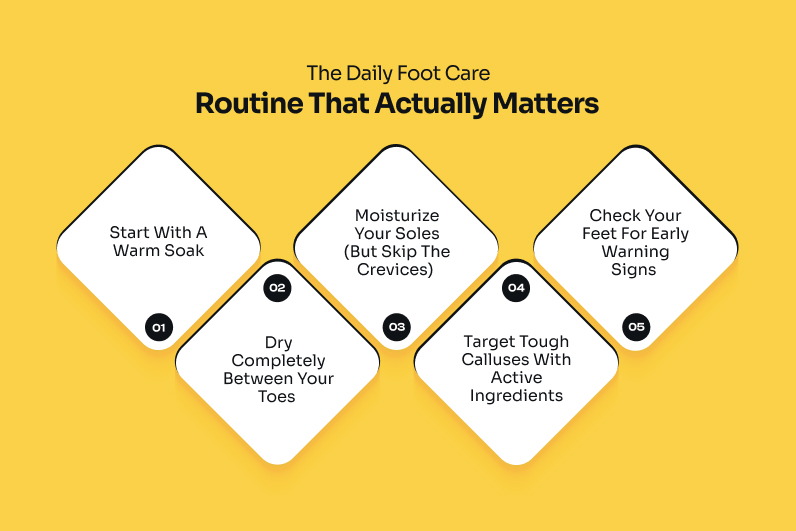
Taking care of your feet doesn’t take much. You just need a few simple steps built right into your daily routine.
That is the whole secret – just a quick habit.
It will help you skip most of the annoying foot issues that end up stealing your time and attention later on.
Start With A Warm Soak
Your first move is a simple soak in lukewarm water. Not boiling – just warm water. Super hot water strips away the healthy natural oils your skin uses as a shield against damage.
In short, cranking up the heat just dries out your skin. It ironically leads to cracked heels and can cause way more damage than you’d expect. Yes, even though you absolutely LOVE that.
Dry Completely Between Your Toes
Towel off completely after your shower or bath, and pay extra attention to the spaces between your toes. Leaving even a little bit of wetness trapped there creates a damp zone. That is the exact setup mold and fungal infections need to move in and grow.
Moisturize Your Soles (But Skip The Crevices)
Slather on a good foot balm every single day – but keep it away from your toe crevices. Massaging cream into your heels and soles protects your skin from splitting into deep, painful cracks.
However, packing that same cream between your toes just builds a cozy little swamp for fungus to grow happily.
Target Tough Calluses With Active Ingredients
If you already have very coarse, heavily calloused heels, let’s be real: basic lotions won’t cut it. You need to hunt down creams packed with urea or lactic acid. These heavy-hitting ingredients are exactly what podiatrists recommend to break down tough skin.
Check Your Feet For Early Warning Signs
Don’t wait until your feet actually hurt to look down at them. Spotting the first signs of a little cut, a tiny crack, or a dark spot lets you fix the problem before it gets ugly.
Trust me when I say this, catching these issues early is honestly your best shot at handling things gently at home without needing professional help.
Why Foot Care Looks Different For Indian Women
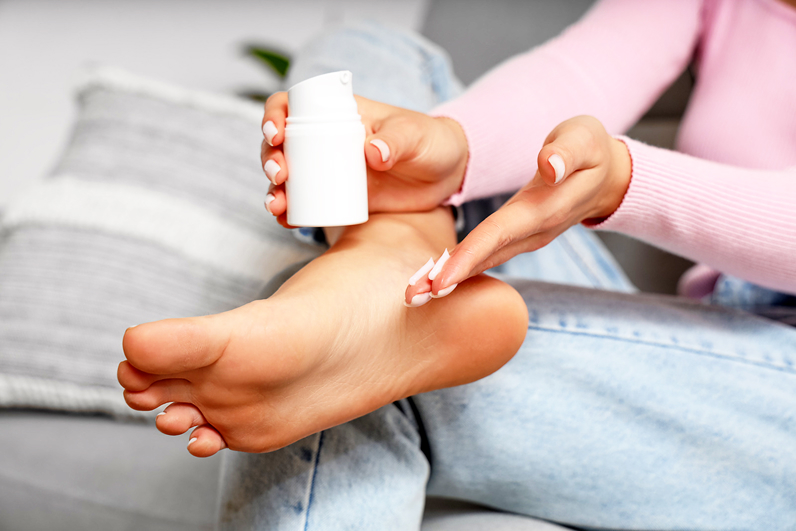
A lot of foot care advice online is written for a context that doesn’t quite match ours. Closed shoes most of the year, cooler climates, no monsoon season, no barefoot temple visits. Our feet deal with a genuinely different set of stresses.
Open footwear for most of the year means more sun exposure and more friction from straps, both of which show up as tanning and dark patches over time.
Monsoon season creates the exact damp, warm conditions fungal infections thrive in, especially for anyone walking through wet streets in open sandals.
And walking barefoot at home, in temples, or on hot pavement is a normal part of daily life here in a way a lot of Western foot care simply doesn’t account for.
None of this means our feet need less care. Rather, it simply means that the specific problems worth addressing are different.
The Questions I Actually See Women Asking About Foot Care
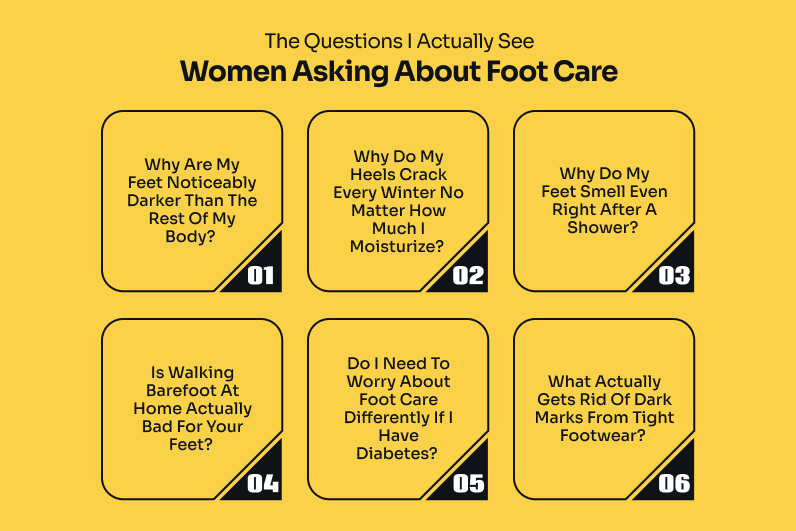
Beyond the basics, most of the real, specific concerns show up as questions, not general tips. Here are the ones that come up most, answered directly.
Why Are My Feet Noticeably Darker Than The Rest Of My Body?
This is almost always sun exposure combined with friction from footwear, not dirt, and washing alone won’t fix it.
Feet are one of the most sun-exposed parts of the body for most of the year, especially in open sandals, and unlike your face, they rarely get sunscreen.
The fix is twofold:
- Sunscreen on your feet when you’re out in open footwear.
- Gentle exfoliation a couple of times a week to help fade existing tan gradually.
Skip harsh scrubbing, which can irritate skin and make dark patches worse rather than better.
Why Do My Heels Crack Every Winter No Matter How Much I Moisturize?
If your skin keeps cracking even though you’re piling on moisturizer, don’t blame yourself. It’s usually about the kind of lotion you’re using, or maybe how you’re putting it on.
Most regular lotions just aren’t strong enough for dry, rough heels. For real results, look for a foot cream with urea or salicylic acid.
Put it on right after your shower, when your skin’s still damp, so it soaks in better. Throw on some cotton socks before bed to help the cream sink in and stay put, rather than ending up all over your sheets.
But if your heels are really cracked, hurt, or start bleeding, it’s time to skip the DIY stuff and call a dermatologist or podiatrist. At that point, you need more than just at-home fixes.
Why Do My Feet Smell Even Right After A Shower?
That foot odor? It’s really just bacteria teaming up with your sweat.
Washing your feet definitely helps, but if you ignore your shoes, you’re not solving the problem. Bacteria love the damp, dark insides of your sneakers or boots – and a quick scrub in the shower won’t do much if you slip them back on right after.
Don’t wear the same pair of shoes two days in a row. Switch it up and let each pair dry out for a full day before wearing them again.
When you shop for shoes and socks, go for natural, breathable fabrics like cotton or leather. Leave the plastic-y stuff on the shelf – those materials just trap heat and moisture.
And seriously, fresh socks aren’t negotiable. Don’t toss on yesterday’s pair, even if they still look “okay.” Reusing socks just piles on more sweat and bacteria, which makes the stink way worse as time goes on.
One last tip: after you towel off, dust your feet with some plain foot powder. It soaks up extra moisture so your shoes stay dry instead of turning into a sweaty swamp.
Is Walking Barefoot At Home Actually Bad For Your Feet?
It is not that simple, to tell you the truth. And at times it may be perfectly okay to walk barefoot. Yet, this largely depends on two factors:
- type of your flooring
- your feet.
So, if you are someone who already deals with foot/heal pain, walking barefoot can actually worsen your pain.
Also, let’s say that you have been struggling with pain in the heel or in the arch. In such a case, opting for a supportive slipper at home instead of always going barefoot could be a good idea.
If you have no existing issues, there’s no strong reason to avoid it.
Do I Need To Worry About Foot Care Differently If I Have Diabetes?
Yes, genuinely more than most other foot concerns on this list. Diabetes can reduce sensation in the feet over time, which means small injuries can go unnoticed and worsen before they’re caught.
If you’re diabetic, checking your feet daily for cuts, blisters, or unusual changes matters far more than it does for most people, and any wound that isn’t healing normally should go to a doctor rather than being treated at home.
This is one area where generic home remedies genuinely aren’t the safe default.
What Actually Gets Rid Of Dark Marks From Tight Footwear?
This combination of friction and mild pigmentation due to repeated pressure will fade gradually, not all at once.
Changing footwear to better-fitting and well-sized shoes prevents the problem from worsening further. Meanwhile, mild scrubs and regular skin moisturizing will gradually help in fading of the existing pigmentation.
But please keep in mind that none of this will happen overnight. It will take a few days.
Also, in case a particular pigmented area changes dramatically in appearance – be it shape, color, or texture – you should go and consult a dermatologist instead of attributing it automatically to footwear-related pigmentation only.
Building This Into An Actual Foot Care Routine
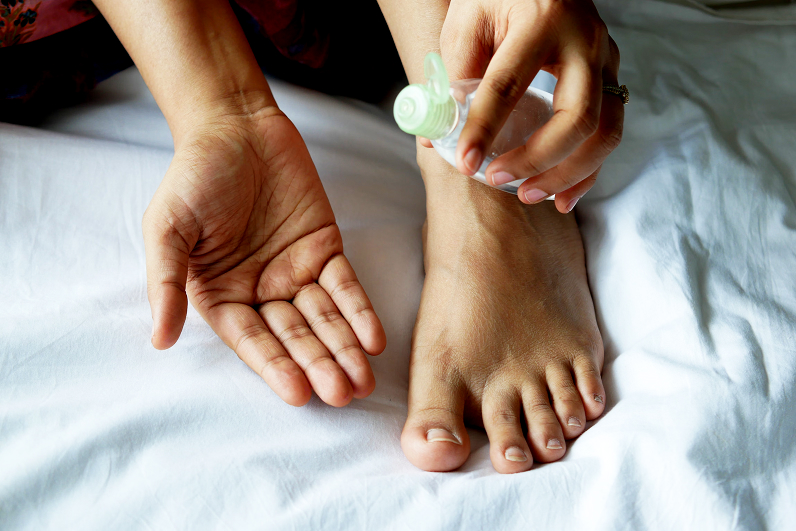
Reading through all of this is one thing. Actually doing it consistently is what makes the difference.
I keep mine simple:
- Wash and dry properly every day.
- Sunscreen on my feet whenever they’re in open footwear.
- A proper at-home pedicure or salon visit every few weeks depending on how my feet are looking.
If you’re building your own routine and want the fuller pedicure-specific breakdown, I’ve covered the following in more detail separately:
- Detailed look at the types of pedicures.
- Should you try the French pedicure?
- An intensive Russian pedicure for stubborn calluses.
And if you’re treating your foot care routine as an actual reset rather than just maintenance, a zero gravity pedicure is worth knowing about too, even if it’s more of an occasional indulgence than a weekly habit.
When To Stop Self-Treating And See A Professional
Most foot problems clear up with regular care at home, but some signs mean it’s time to stop experimenting and call your doctor.
If your heels crack so deeply they bleed or make walking painful, you shouldn’t try to tough it out. Wounds that won’t heal after a couple of weeks – especially if you have diabetes – are another red flag.
If you’re dealing with stubborn, fungal-looking patches that ignore every over-the-counter cream you throw at them, don’t keep waiting. The same goes for any sudden or strange changes in your skin color or texture.
Now, honestly, you probably might not run into these problems often. However, I think it’s always a good idea to stay aware of what exactly could happen and what to look out for. In that way, you will not be left second-guessing.
Foot care in itself can be really simple. But that happens once you discover what the real reason is behind your discomfort instead of just going with some random advice that doesn’t suit:
- Your daily situation.
- The climate.
- Your footwear.
For most things, a handful of solid, consistent habits are enough.
What about the rest? That’s where it helps to know when your feet need something different – a new strategy, more time, or sometimes just a professional’s opinion.