
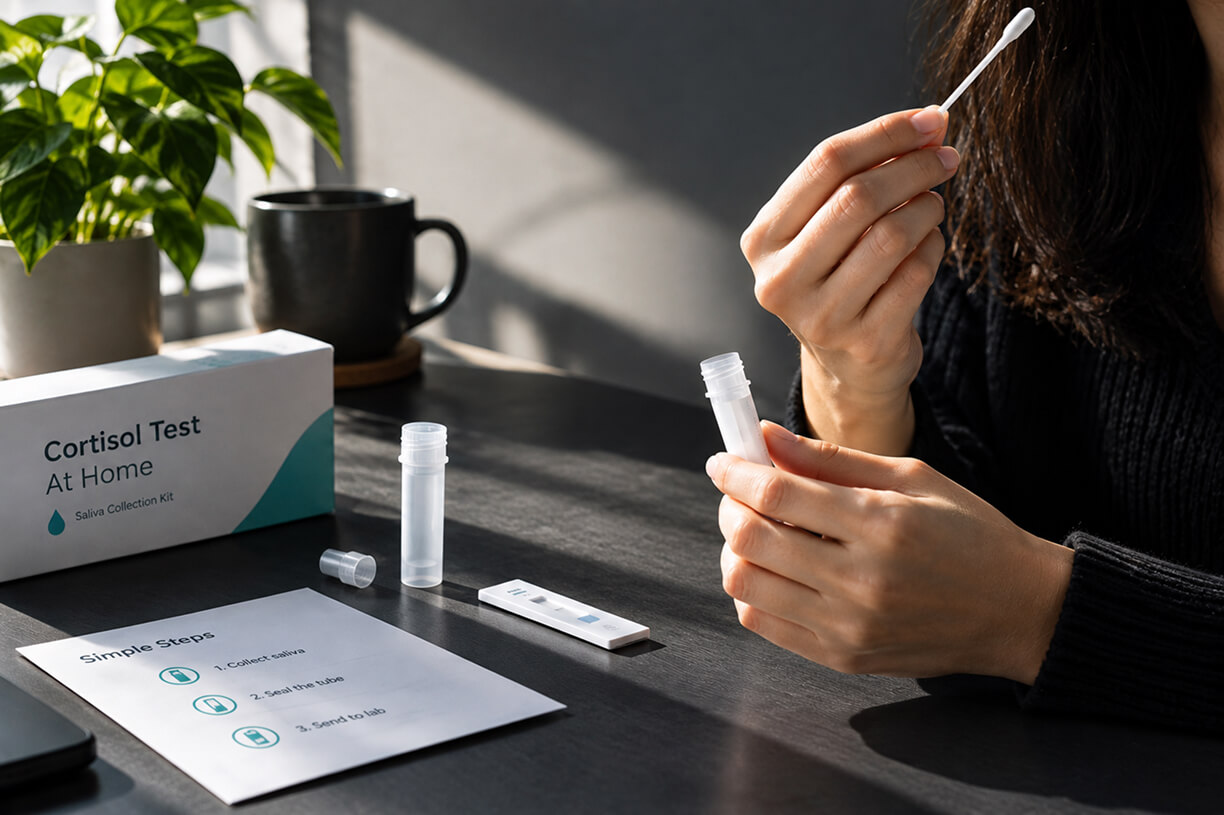
| Quick Answer: A cortisol test at home in India usually means a blood sample collected by a technician who visits you, through labs like Thyrocare or Healthians, with results in 24-48 hours. There are actually three different types of cortisol tests – blood, saliva, and 24-hour urine – and they measure slightly different things. A single result is a snapshot, not a diagnosis, and timing matters more than most people realize. |
After reading and writing about cortisol for weeks, I finally did the thing I kept telling readers to consider: I booked a cortisol test at home for myself.
Partly curiosity, partly because I genuinely wasn’t sure if my exhaustion was “just tired” or something more. Booking it took about four minutes on an app.
Getting a result I actually understood took a lot more reading than I expected – which is exactly the gap I want to fill here.
The Three Types Of Cortisol Tests
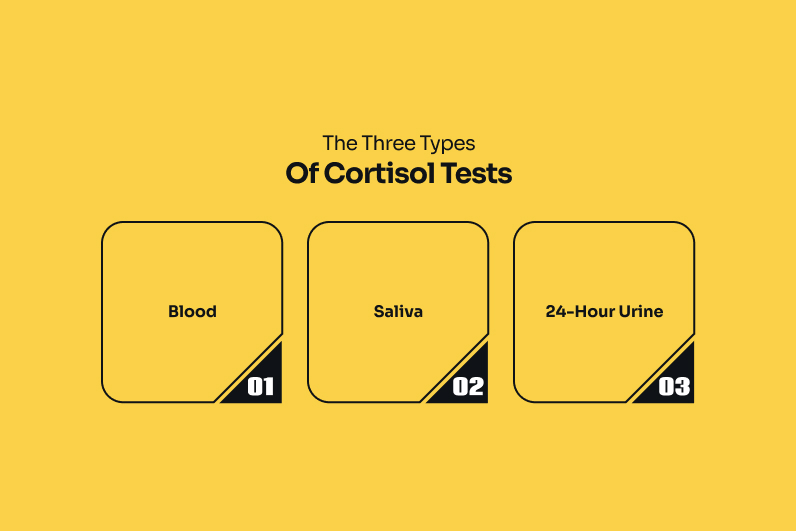
Most people don’t realize there isn’t just one cortisol test – there are three, and they answer different questions.
Blood
A blood test measures total cortisol – both the active and inactive, protein-bound portion. It’s the most common option for home collection in India and gives a single snapshot at the time of the draw.
The catch: the stress of the needle itself can temporarily raise your cortisol.
Yes, you read that right! Also, certain medications – including birth control pills – can inflate readings by 2 to 3 times normal values. That’s because estrogen increases a protein that binds cortisol.
Saliva
Saliva testing measures only the free, biologically active cortisol – the portion actually available to affect your tissues.
It correlates strongly with blood measurements of free cortisol and is considered around 95% accurate for screening high-cortisol conditions.
It’s less commonly offered for home collection in India right now, but it’s the better option if you’re trying to track your cortisol rhythm across a full day rather than get one number.
24-Hour Urine
This involves collecting all your urine over a full day and is generally considered the most complete single-day picture of total cortisol production.
It’s more involved logistically and is usually reserved for cases where a doctor is specifically investigating a suspected adrenal condition, not for general curiosity.
Cortisol Test At Home: Which One Should You Actually Ask For?
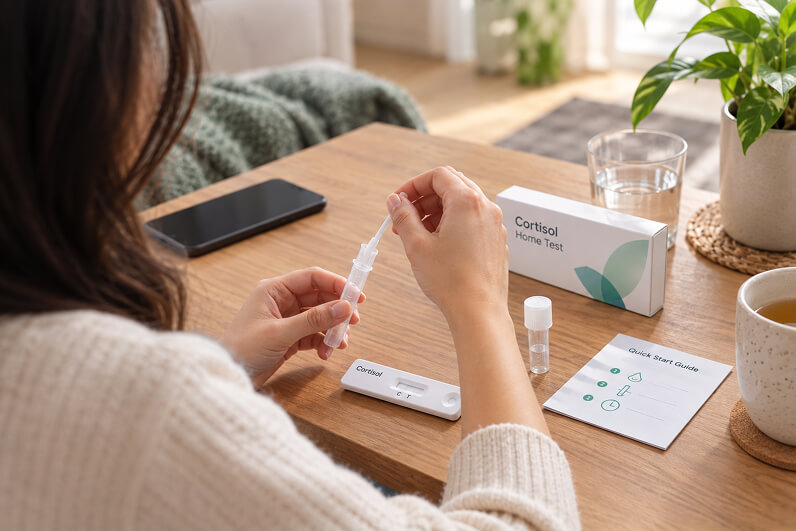
For most people just wanting a general read, a morning blood test is the practical, accessible starting point in India. It’s what’s most widely available for home collection, and it’s the one a doctor will usually order first anyway.
Saliva or urine testing tends to come later, if the blood result or your symptoms point toward something that needs a closer look.
Getting A Cortisol Test At Home In India
Thyrocare and Healthians both offer NABL-certified at-home blood collection for cortisol testing. A technician visits your address. Digital reports are typically emailed within 24 to 48 hours – no half-day off work for a lab visit.
Pricing for a basic serum cortisol test generally falls in the few-hundred-to-under-a-thousand-rupee range. However, the cost varies by city. It also depends on whether you book directly or through an aggregator app.
It’s worth checking current pricing and slot availability on the app before booking, since both change often.
The Timing Trap Almost Everyone Gets Wrong
Cortisol follows a daily rhythm – high in the morning, tapering through the day, lowest at night.
A test taken at 4 pm and one taken at 8 am from the same person can look completely different. Not because anything’s wrong, but because that’s what cortisol is supposed to do.
Most labs recommend collection between 7 and 9 am specifically because that’s when reference ranges are calibrated.
I made the mistake of not checking this before my own slot was booked for late morning – it still gave a usable result. But it’s worth locking in an early slot deliberately rather than whatever time happens to be convenient.
What My Cortisol Test At Home Results Said
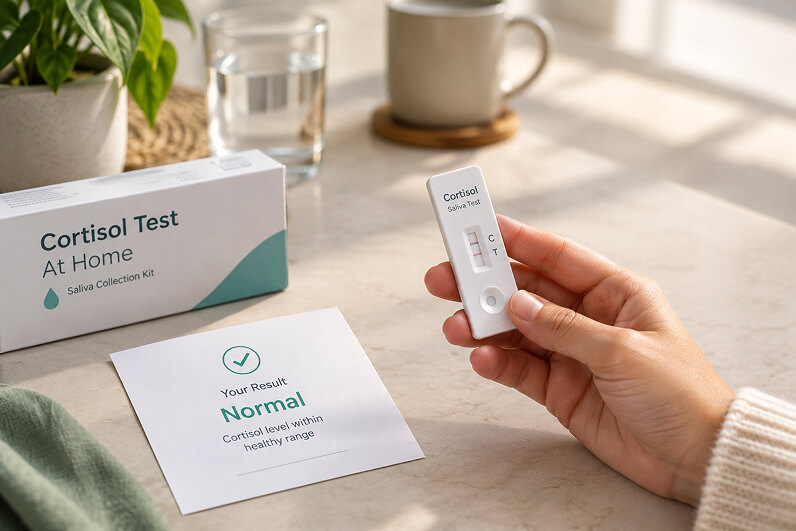
Mine came back within normal range, which was almost anticlimactic after weeks of half-expecting a dramatic number.
But it was still useful – it told me my exhaustion wasn’t primarily a cortisol problem, which meant I could stop treating it as one and look elsewhere, rather than continuing to chase a hormonal explanation that wasn’t the actual cause.
Things That Can Skew Your Result
Beyond timing, a few things commonly throw off a single cortisol reading:
- Recent intense exercise.
- Poor sleep the night before.
- Acute illness.
- Birth control pills.
These are common enough among Indian women that it’s worth flagging to whoever interprets your result.
None of these make the test useless. But they’re exactly why you shouldn’t treat one number, taken once, as a verdict on your health.
What A High Number Doesn’t Automatically Mean
A slightly elevated result doesn’t necessarily mean a medical condition. It often just reflects an unusually stressful stretch, and constant small stressors add up more than people expect.
Every notification is a minor stress cue. Every reflexive phone check is also a stress cue. Your body responds to these cues. This is the same underlying pattern behind digital burnout.
And for some people, this pattern is also behind the memory fog described as digital dementia.
Once you start noticing how often your phone interrupts you, you tend to keep noticing it – the red car theory again.
When To Actually See A Doctor

A cortisol test at home is a reasonable first step for curiosity or peace of mind. But can I be really honest with you? It isn’t a substitute for a doctor reading your result against your full symptom picture.
If your result is significantly outside the normal range, or you’re dealing with symptoms like unexplained weight changes, unusual bruising, or persistent fatigue that isn’t improving with rest, that’s worth taking to a doctor directly rather than researching further on your own.
Where This Fits Into the Bigger Picture
If your result comes back normal, like mine did, it doesn’t mean the exhaustion, burnout, or stress you’re feeling isn’t real. It usually just means the fix is more about daily habits than hormones.
Specific how to reduce screen time tips, building longer stretches of focus through how to fix attention span work, and knowing the difference between an actual cortisol detox and the misleading marketing around that phrase all matter more than a single test result.
On weeks where things build up regardless, a short digital detox, or a proper digital detox retreat if it’s been building for a while, tends to help faster than more research does. And something as small as stepping outside – a real version of touch grass – genuinely helps too.
If you’re a woman specifically trying to lower your cortisol day to day rather than just measure it, that’s worth reading on its own, since the approach differs meaningfully by hormonal cycle.
And for a lot of us, the background hum of stress isn’t only about screens or hormones – it’s also sitting under something bigger, like the great millennial career crisis, which no test result is going to resolve on its own.
Getting tested felt like a bigger step than it actually was – four minutes to book, a quick visit at home, and a number that ended up telling me more about what wasn’t the problem than what was.
If you’ve been going back and forth on whether to check, that’s reason enough to actually do it, rather than keep guessing.
| Disclaimer: This article is for general informational purposes and isn’t a substitute for professional medical advice. If you have concerns about your cortisol levels or hormonal health, please consult a doctor. |
Sources:
- “Cortisol Test,” MedlinePlus
- “Cortisol Test: What It Is, Purpose, Types & Results,” Cleveland Clinic
- “Cortisol Testing for Women: Saliva vs Blood vs Urine,” Formblends
- “Saliva vs. blood cortisol tests: which one is right for you?,” Eli Health